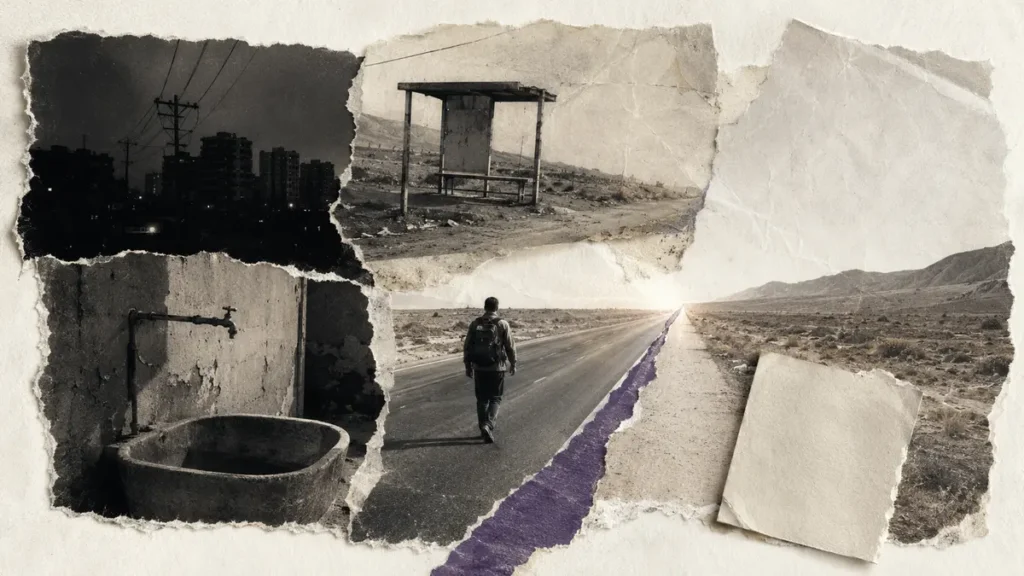
Fleeing Venezuela
Carlos Hernández recounts escaping Nicolás Maduro’s Venezuela during the pandemic, travelling from Puerto Ordaz toward Colombia through theft, dehydration, military predation, smugglers, guerrilla-controlled territory, and repeated shakedowns. He connects the dangerous journey to the collapse of electricity, internet, transport, water, food affordability, cooking gas, and medical care, showing how authoritarianism and economic breakdown reduce ordinary urban life to survival.
Opens on www.persuasion.community · Curated by GlobeRead
GlobeRead's Take
Arguments about democracy and authoritarianism can become bloodless when reduced to constitutions, elections, and ideology. Hernández restores the missing scale: whether water runs, a wound can be treated, online work remains possible, or a traveller can carry identification without being robbed by armed authorities. State collapse is experienced as thousands of practical dangers before it becomes a historical label.nnHis departure begins with preparation and rapidly becomes exposure. He carries documents, money, cards, food, and water; bit by bit, almost everything is stolen. Avoiding the paved route controlled by predatory Venezuelan soldiers forces him onto an illegal track through territory influenced by Colombia’s ELN guerrillas. The border is not a clean line between jurisdictions but an economy of drivers, armed groups, informal tolls, vulnerable migrants, and Indigenous Wayuu children collecting coins in extreme heat.nnThe decision to accept those risks grew from years of institutional erosion in Puerto Ordaz. Repeated power and data outages made freelance work unreliable; public transport and cooking gas disappeared; clean water required constant searching; basic food kept becoming more expensive. Hospitals lacked staff and supplies so thoroughly that ordinary infections or allergic reactions could become fatal. Migration was not an adventurous search for opportunity but a calculation that staying had become more dangerous than flight.nnWe selected this testimony because it makes political freedom tangible without turning one person into a symbol stripped of personality. Readers interested in Venezuela, migration, democracy, and Latin American politics should encounter the choices behind abstract migration statistics. The journey’s most unsettling lesson is how quickly a modern life can be dismantled until an unmarked dirt road begins to look like the safer future. The account also resists the comforting belief that collapse arrives suddenly and unmistakably. It accumulates through normalized outages, shortages, corruption, and workarounds until citizens must risk extraordinary violence merely to recover conditions that once counted as ordinary life.
We curate the internet's most interesting articles — science, psychology, history, philosophy and more. Always free, no algorithm.