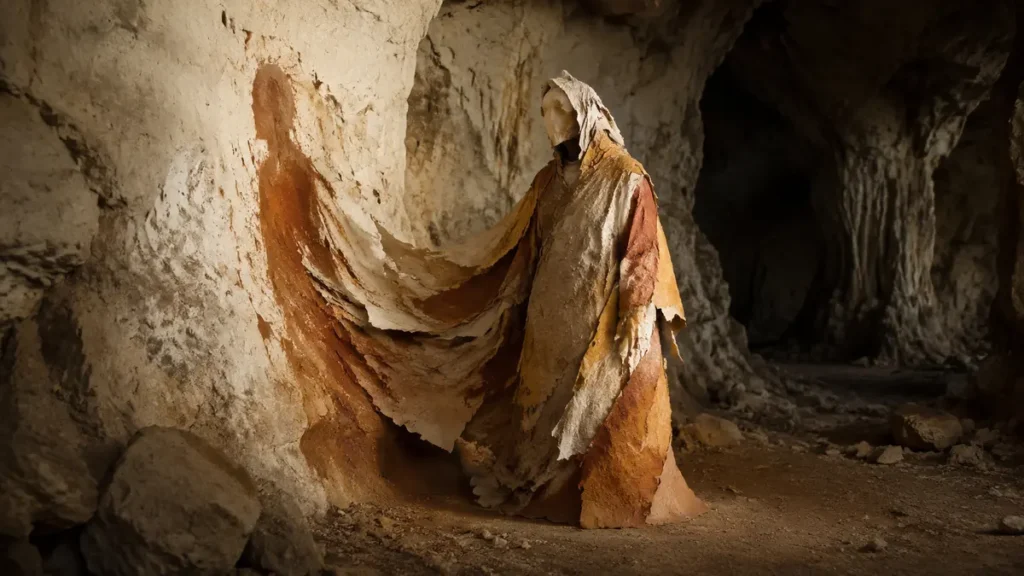
How art invented humanity
J F Martel challenges the assumption that humans invented art as a tool or ornament. Beginning with prehistoric cave images, he argues that image-making helped create distinctly human consciousness by enabling reflection, symbolic distance and shared worlds. The essay contrasts factual “accounting” truth with art’s ecstatic disclosure of existence, proposing that images do not merely represent a ready-made reality but reveal the intelligibility and mystery that make meaning possible.
Opens on aeon.co · Curated by GlobeRead
GlobeRead's Take
Generative technology has revived an old question in a sharper form: is art a product humans manufacture, or a mode of experience that transforms its makers? Treating images as optional cultural outputs misses how deeply perception, symbol and self-understanding depend on them. The stakes reach beyond aesthetics into what kind of being a human is.nnPrehistoric cave paintings challenge the familiar story of gradual technical improvement. Their animals arrive with movement, selection and formal power, suggesting that representation was never merely a crude copy of visible objects. By externalizing an encounter, an image lets its maker and viewers stand apart from immediate sensation, return to it and share it. The capacity to make images may therefore have reorganized attention and identity rather than simply expressing an already completed mind.nnMartel also distinguishes factual truth from ecstatic disclosure. A painting can show identifiable crows and a field while revealing something that cannot be reduced to a list of objects or propositions: the astonishing fact that things appear meaningfully at all. Science requires an intelligible universe before it can count anything. Art directs attention toward that prior mystery, reminding us that measurement depends on a world already experienced as present and significant.nnWe picked this ambitious essay because it treats art as a form of knowledge without forcing it to imitate science. Artists, designers and readers interested in consciousness will find a rich alternative to accounts based only on communication, status or evolutionary advantage. Its claims are philosophical rather than archaeological proof, but their scale is precisely the attraction.That framing is especially provocative now, when images are produced and consumed at extraordinary speed. Quantity can expand without deepening the encounter through which an image reorganizes perception. Martel implicitly asks us to distinguish visual output from the event of recognition that makes art consequential. If images helped create the reflective beings who now produce them, what happens when image-making is delegated to systems that do not encounter a world?
We curate the internet's most interesting articles — science, psychology, history, philosophy and more. Always free, no algorithm.