Stamina
Sohini Chattopadhyay reports on the Sagroli Sunrise Project, a long-distance running programme linked to a military-oriented rural school in Maharashtra. The story follows girls training under coach Nandu Jadhav, the nutrition and discipline required for endurance, and sport’s promise of education, employment, prize money, and mobility. It also examines unequal family investment, corporate sponsorship, cricket’s dominance, and the fragile path from talent to a career.
Opens on fiftytwo.in · Curated by GlobeRead
GlobeRead's Take
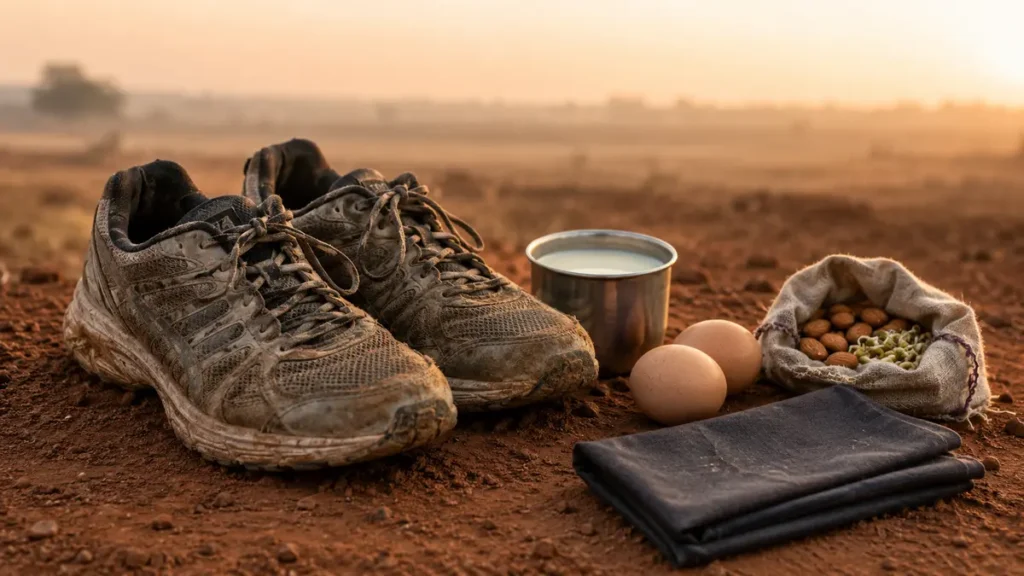
Sport is often narrated as pure merit: talent plus discipline produces opportunity. Rural athletes reveal how incomplete that formula is. Endurance depends on food, transport, coaching, school flexibility, family permission, safe accommodation, and a competition system able to notice performance. For girls, every one of those inputs is shaped by expectations about whose ambition deserves investment.nnThe Sunrise Project’s nutrition programme makes inequality bodily. Coach Nandu Jadhav speaks to parents about milk, eggs, sprouts, nuts, fruit, and the need to feed daughters as seriously as sons. That instruction is not a minor supplement to training; it determines whether intense daily running builds strength or depletes an already undernourished athlete. Stamina is therefore produced by a support system before it becomes an individual virtue visible at the finish line.nnThe project emerged after Mumbai’s marathon demonstrated that distance running could attract sponsors, prize money, media attention, and a possible livelihood. Yet India’s sporting economy is uneven. Cricket’s extraordinarily wealthy governing structure dwarfs football, hockey, badminton, kabaddi, and athletics, which rely on scattered corporate programmes and local institutions. A talented runner can improve dramatically while remaining one injury, funding gap, or family crisis away from leaving the sport.nnWe picked this report because it resists both sentimental inspiration and cynical dismissal. Athletes, coaches, educators, policymakers, and readers interested in gender and rural mobility will see how aspiration is assembled from calories, schedules, money, trust, and repeated miles. The finish line celebrates one runner, but the more revealing story begins with everything that had to keep pace behind her. That perspective changes how achievement should be credited. Medals may belong to athletes, but durable sporting cultures belong to communities that repeatedly fund the unglamorous conditions of participation, especially after attention moves to the next inspiring success story and public applause has faded.
We curate the internet's most interesting articles — science, psychology, history, philosophy and more. Always free, no algorithm.