The Art of Getting Lost in Minnie Evans
Doreen St. Félix considers a Whitney retrospective of visionary artist Minnie Evans, whose dream-driven drawings combine symmetry, faces, eyes, plants, animals, spiritual imagery, and intense color. The essay traces Evans’s life in Wilmington, her work as a domestic servant and garden gatekeeper, her relationship with advocate Nina Howell Starr, and the art world’s limiting labels of “primitive,” naïve, and outsider.
Opens on www.newyorker.com · Curated by GlobeRead
GlobeRead's Take
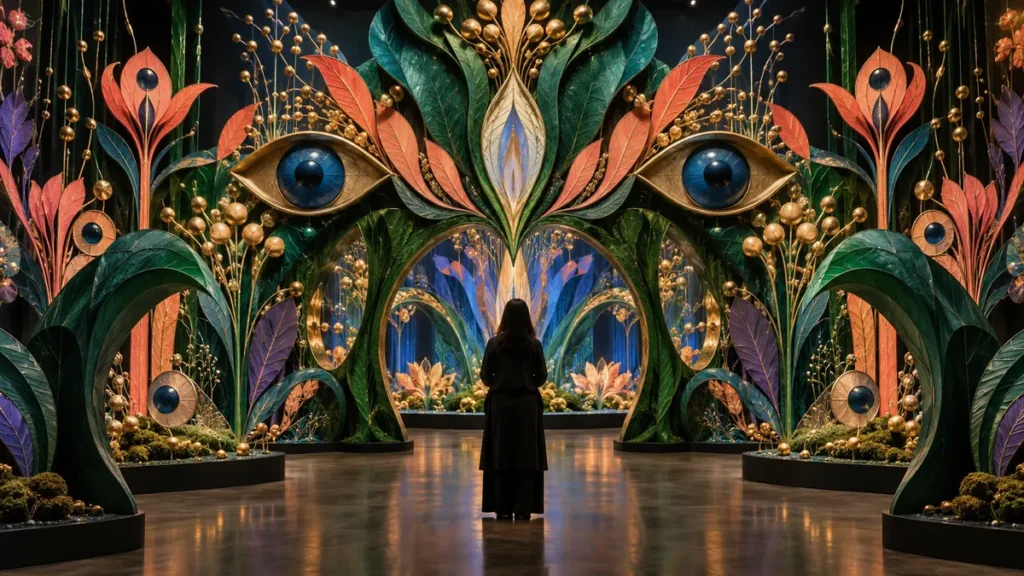
Museums are reconsidering artists once placed outside modernism’s official story, but recovery can reproduce the old hierarchy if biography becomes an explanation for genius. Minnie Evans was called primitive, naïve, spiritual, and untaught—labels that made her legible while shrinking her agency. St. Félix’s essay matters because it asks viewers to acknowledge history and context without pretending those frameworks can solve the work’s dense visual intelligence.nnEvans’s drawings resist ordinary foreground and background. Mirrored forms, floating heads, repeated eyes, serpents, plants, and saturated secondary colors create worlds that seem closed yet intensely alive. The critic describes a point when decoding gives way to surrender, a useful challenge to the museum habit of treating looking as extraction. Not every symbol yields a stable meaning, and uncertainty can be an appropriate response rather than a failure of education.nnThe history of Evans’s recognition is equally complicated. Photographer Nina Howell Starr advocated for her, organized exhibitions, and preserved an extraordinary body of work, but the period’s fascination with the “discovered” self-taught artist shaped how institutions received her. Evans’s Wilmington life included the legacy of a white-supremacist coup, domestic labor, gardens marked by histories of pleasure and conquest, sons sent to war, religious experience, films, and family memory.nnWe picked this criticism because it models attention without conquest. Artists, museum visitors, students of Black art, and readers interested in creativity outside formal institutions will find a portrait that honors Evans’s powers without forcing them into a neat origin story. St. Félix lets scholarship illuminate the drawings while preserving their opacity, which is a rare form of critical respect.Her work reminds us that institutional recognition can correct neglect while still imposing categories that determine which kinds of brilliance appear respectable. What becomes visible when we stop asking an artwork to explain itself and allow our own certainty to get lost instead?
We curate the internet's most interesting articles — science, psychology, history, philosophy and more. Always free, no algorithm.