Welcome, Ghosts
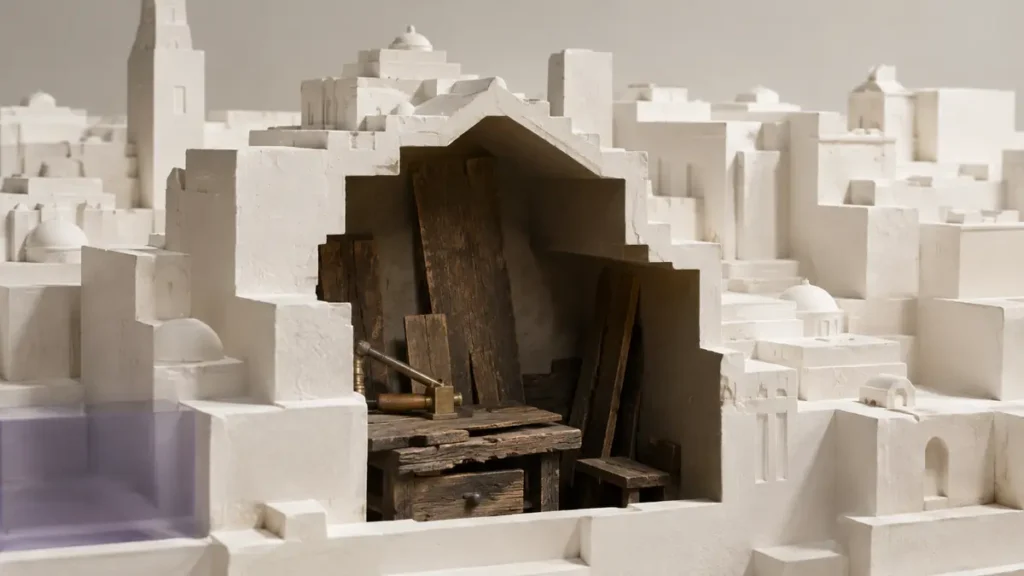
Simon Sarris wanders through digitized archives to recover “ghosts”: ordinary places, practices, and social possibilities that history rarely names. Through images of home workshops, bistros, shopkeepers, and older forms of informal enterprise, he argues that regulation and professionalization can erase permissionless spaces, hide work from view, reduce intergenerational participation, and narrow the settings where people and ideas meet.
Opens on map.simonsarris.com · Curated by GlobeRead
GlobeRead's Take
Progress records what it builds more readily than what it makes impossible. A licensed, standardized city may be safer and more legible while losing humble arrangements that never had formal names. Sarris invites us to study absence itself—the vanished option, invisible in statistics because nobody can choose it anymore.nnThe home-front workshop is powerful precisely because it joins livelihood, residence, skill, and neighborhood without asking several institutions for permission. Its disappearance does not only change commercial real estate; it moves work out of public view. Children see fewer trades practiced, neighbors encounter fewer makers, and practical knowledge loses a place to circulate. The essay’s claim that genius emerges through interaction between people and places makes informality a cultural resource, not simply a cheaper business model.nnThe bistro sharpens the point. A small restaurant could arise from a household kitchen, migration, necessity, and local demand before becoming a fashionable category. Rules may reduce genuine harms, yet their accumulated fees and approvals favor organizations able to navigate complexity. Older people or modest households then lose ways to remain economically and socially active. Formal care can replace participation, solving one problem while quietly producing another kind of isolation. Archives become politically useful under this lens. They preserve evidence that present arrangements are not inevitable: streets, shops, households, and work once combined differently. Remembering those alternatives expands design imagination, even when the original forms cannot or should not be restored unchanged.nnWe picked this because it changes how a reader looks at historical images and contemporary streets. It will appeal to people interested in cities, institutions, local enterprise, aging, or the accidental settings where culture forms. Sarris is not offering a simple case against regulation; he is teaching us to include lost possibilities in the ledger. When you look around your neighborhood, which absence has become so normal that it no longer appears missing?
We curate the internet's most interesting articles — science, psychology, history, philosophy and more. Always free, no algorithm.