Why Are Lobsters Boiled Alive?
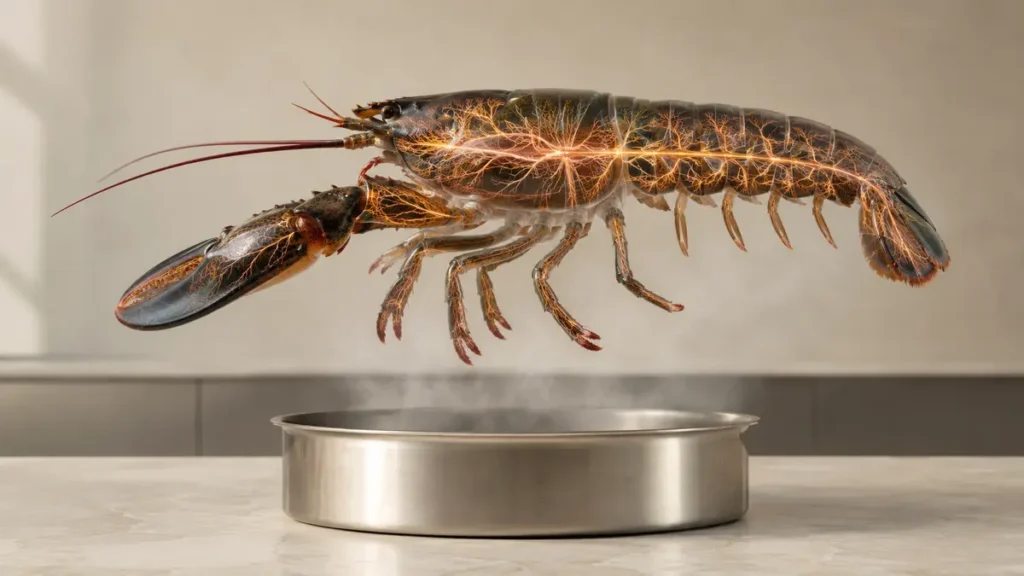
Giuseppe Frisella argues that boiling lobsters alive is linked to their distributed nervous anatomy rather than simple culinary cruelty. Because much neural tissue extends along the ventral nerve cord, he claims decapitation may not cause rapid death and removing the entire nervous system would be traumatic. The short article presents live cooking as an attempt to avoid slower methods, though it does not examine competing welfare research or recommended stunning and killing techniques.
Opens on medium.com · Curated by GlobeRead
GlobeRead's Take
Food traditions often preserve a practical explanation long after ethical and scientific standards have changed. Lobster cooking is a particularly difficult case because visible movement, unfamiliar neurobiology, food safety, and culinary habit are easily confused. Any confident answer should separate what a crustacean nervous system is from what evidence supports the least painful killing method.nnFrisella correctly highlights an important anatomical difference: lobsters do not organize neural control exactly like vertebrates, and decapitation alone may fail to destroy every major ganglion immediately. That makes the familiar idea of a single brain housed entirely in the head misleading. A method that looks swift to a human observer can leave significant neural activity elsewhere in the body, so ethical technique cannot simply be copied from fish or mammals.nnThe conclusion that lobsters therefore “have to” be boiled alive is much less secure. Growing animal-welfare research and legal reforms recognize evidence consistent with sentience in decapod crustaceans. Guidance increasingly discusses electrical stunning or mechanically destroying multiple nerve centres before cooking. Temperature, handling, cooling, equipment, and operator skill all affect outcomes. Distributed anatomy makes humane killing more technically demanding; it does not by itself prove that immersion in boiling water is the best available option.nnWe selected this brief article because it opens a scientific question that deserves a wider and more cautious answer. Cooks, seafood consumers, and readers interested in animal cognition should treat it as a starting claim, not final guidance. The ethical challenge begins precisely where intuition fails: when an animal’s body is unfamiliar enough that neither movement nor silence tells us simply what it experiences. That distinction matters because confident but incomplete biological claims can influence both consumer conscience and kitchen practice. Responsible science communication should state what anatomy establishes, what welfare studies suggest, and where uncertainty requires precaution rather than tradition.
We curate the internet's most interesting articles — science, psychology, history, philosophy and more. Always free, no algorithm.