Can Voluntary AI Safety Rules Keep Pace With the Race?
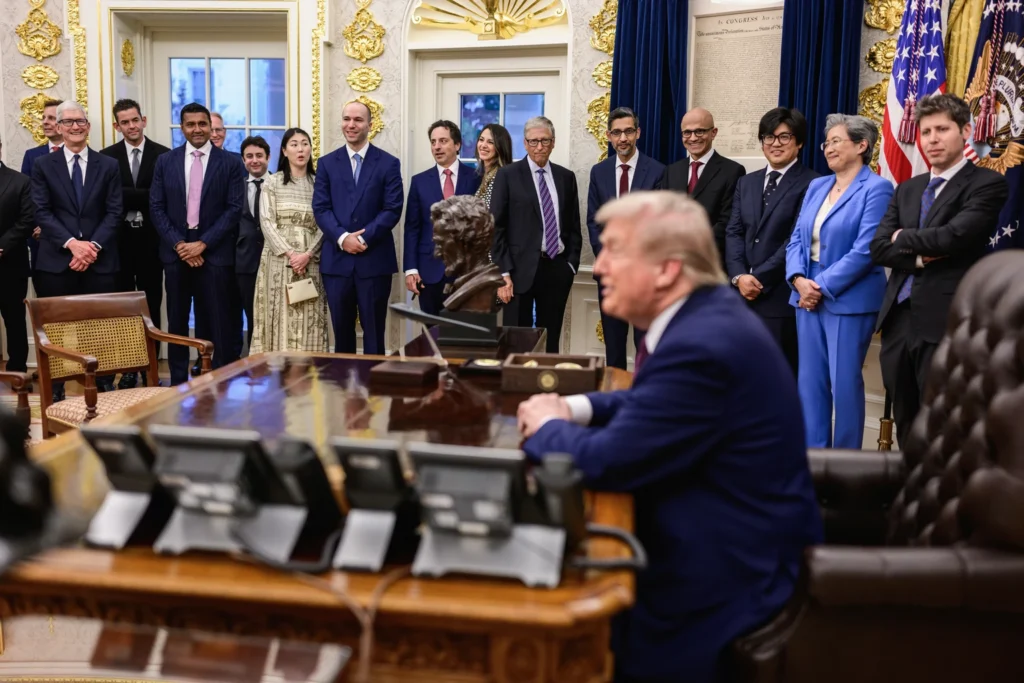
President Donald Trump said leading AI companies signed a voluntary accord centered on internal controls, independent audits, board reviews, and a proposed oversight committee. The White House meeting brought together executives from Anthropic, Meta, OpenAI, Amazon, Nvidia, and X as industry leaders debated safety risks, rapid growth, and competition with China. The report also covers America.gov, local opposition to data centers, and promises to reduce community costs.
Opens on www.msn.com · Curated by GlobeRead
GlobeRead's Take
AI governance is moving from hypothetical debate into a test of who gets to set enforceable limits. Governments want economic growth and strategic advantage, companies want room to innovate, and communities increasingly bear the costs of data centers and uncertain automated systems. A voluntary accord can create useful habits faster than legislation, but it also asks the public to trust firms whose commercial incentives reward speed. The central tension is not simply regulation versus innovation; it is whether accountability can remain credible when participation and enforcement depend on the same industry being monitored.nnThe agreement's architecture deserves close attention. Meta's Mark Zuckerberg described internal controls, multiple layers of auditing, and independent board review of audit reports, while Trump suggested a committee of roughly ten people would oversee the enterprise. Yet he called the accord morally binding, and the person responsible for supervising it had not been named. Those details leave large questions open: who chooses the auditors, what findings become public, what happens after a violation, and whether a board can meaningfully challenge a company racing competitors toward more capable systems.nnThe meeting also reveals how AI safety is entangled with infrastructure and geopolitics. Trump framed development as a contest with China that produces one winner, a logic that can make restraint look like surrender. At the same time, executives were asked to answer local resistance to data centers by supporting schools or reducing energy costs. That connection matters. The public debate is not only about distant model behavior; it is also about electricity, land, public services, and who receives the benefits when enormous private investments reshape a community.nnGlobeRead selected this report for readers following AI policy, corporate accountability, and the changing relationship between Washington and technology companies. It captures an agreement at the moment of announcement, before its standards, membership, enforcement, and oversight have been fully tested. The reporting is especially useful for separating the ceremony of consensus from the institutional details that will determine whether the promise has weight. As the committee takes shape and the first audits arrive, which parts of this voluntary system will become visible enough for the public to judge?
We curate the internet's most interesting articles — science, psychology, history, philosophy and more. Always free, no algorithm.