Five Strength Moves That Protect Independence After 50
Sarah Klein explains how strength training after 50 can counter age-related muscle and bone loss, reduce falls, and preserve everyday abilities. Trainers recommend starting with one to three sets of six to 15 repetitions at least twice weekly, with medical or professional guidance when needed. The guide teaches a goblet squat, sitting-rising test, seated overhead press, kickstand Romanian deadlift, and bear crawl hold, plus easier and harder modifications.
Opens on time.com · Curated by GlobeRead
GlobeRead's Take
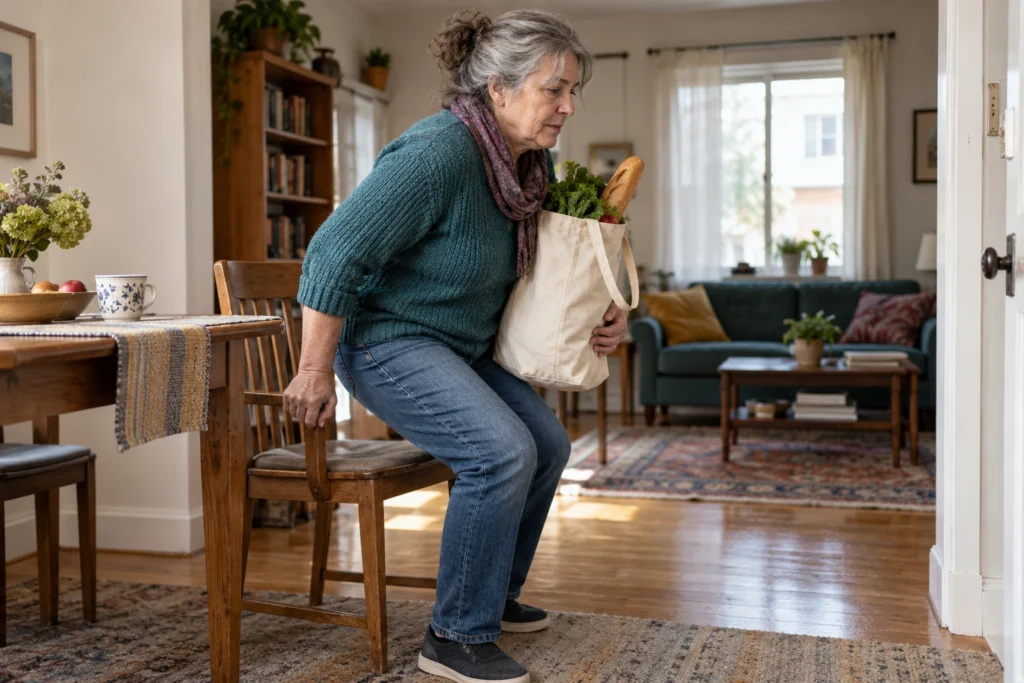
Strength in later life is less about appearance than access: getting off the floor, lifting a suitcase, carrying groceries, and recovering balance before a fall. Muscle loss begins long before most people notice it, which makes maintenance easy to postpone. Framing training around ordinary independence gives the subject a clearer purpose than chasing an abstract fitness ideal.nnThe selected movements map directly onto daily tasks. A goblet squat rehearses standing from a chair; the sitting-rising test combines lower-body strength, mobility, and balance; and a seated overhead press supports reaching a high shelf. Those translations matter because they show why form and range are more important than impressive weight. One to three sets of six to 15 repetitions can be useful, and the article emphasizes consistency at least twice weekly rather than an exhausting start.nnModification is treated as progression, not defeat. A step-down can replace a squat, hands can assist the floor rise, and the kickstand deadlift can begin without weight. The bear crawl hold strengthens the core and pelvic floor while an elevated surface reduces difficulty. Medical clearance and professional coaching are sensible when injuries, surgery, or long inactivity complicate the starting point. The underlying principle is to preserve the movement pattern while adjusting the demand.nnWe selected this guide for adults over 50 and for family members helping someone rebuild confidence after a sedentary period. Its value is the connection between five exercises and the freedoms they protect, supported by precise instructions and realistic variations. Readers can choose a manageable entry point instead of waiting to feel “fit enough” for strength work. Tracking ease of everyday movement, steady balance, growing confidence, and control may prove more motivating than chasing a number on the scale or comparing weights with someone else. Which everyday task could become your most meaningful measure of progress?
We curate the internet's most interesting articles — science, psychology, history, philosophy and more. Always free, no algorithm.