Spatial Interfaces
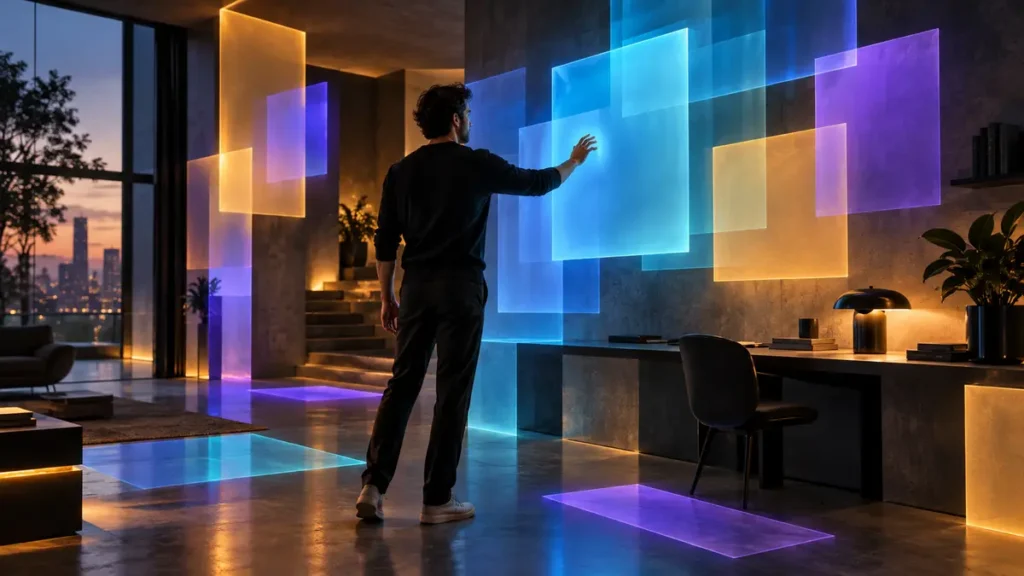
A forward-looking analysis of spatial computing and interfaces that leverage physical environments and spatial memory. The article discusses why traditional flat screens limit human expression and how spatial layouts unlock better information organization and conceptual thinking.
Opens on darkblueheaven.com · Curated by GlobeRead
GlobeRead's Take
For decades, software design has forced our complex, multi-dimensional thinking into flat grids of tiny pixels and rigid nesting folders. This visionary design essay argues that we are on the precipice of an interface revolution that aligns with our innate physical psychology rather than computing limits. It challenges builders to stop shrinking data into icons and start expanding digital environments into the physical dimensions our bodies evolved to navigate.
The core insight centers on the incredible power of human spatial memory—our ancient, evolutionary ability to naturally recall where objects sit in a room far better than where a file lives in a digital directory. Moving information interfaces into persistent spatial dimensions allows our brains to utilize muscle memory and physical intuition for advanced data management. This cognitive shift transforms interacting with data from an abstract, fatiguing task into an intuitive, physical workflow.
Additionally, the text explores how spatial layout design bridges the long-standing gap between creative brainstorming and final execution. When thoughts, references, and working drafts can live together in an infinite, interactive visual arena, we unlock richer associative thinking that traditional screen applications actively choke out. Designing software should be viewed as an act of architecture rather than graphic layout.
We chose this piece because it provides a foundational, highly articulate framework for understanding the future of mixed reality and computing. Digital product designers, tech builders, and productivity nerds will find it an absolute goldmine of conceptual inspiration. How might your daily creative output change if your workspace was an immersive room rather than a flat monitor?
We curate the internet's most interesting articles — science, psychology, history, philosophy and more. Always free, no algorithm.