What Trump’s Building Fixation Reveals About His Presidency
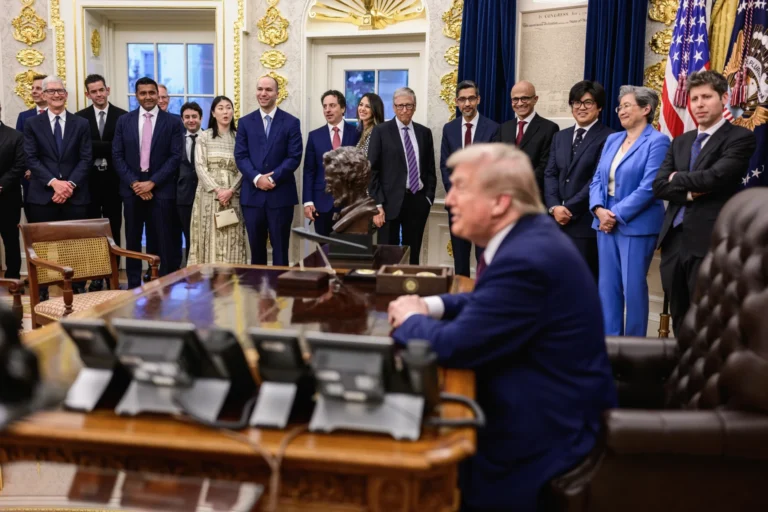
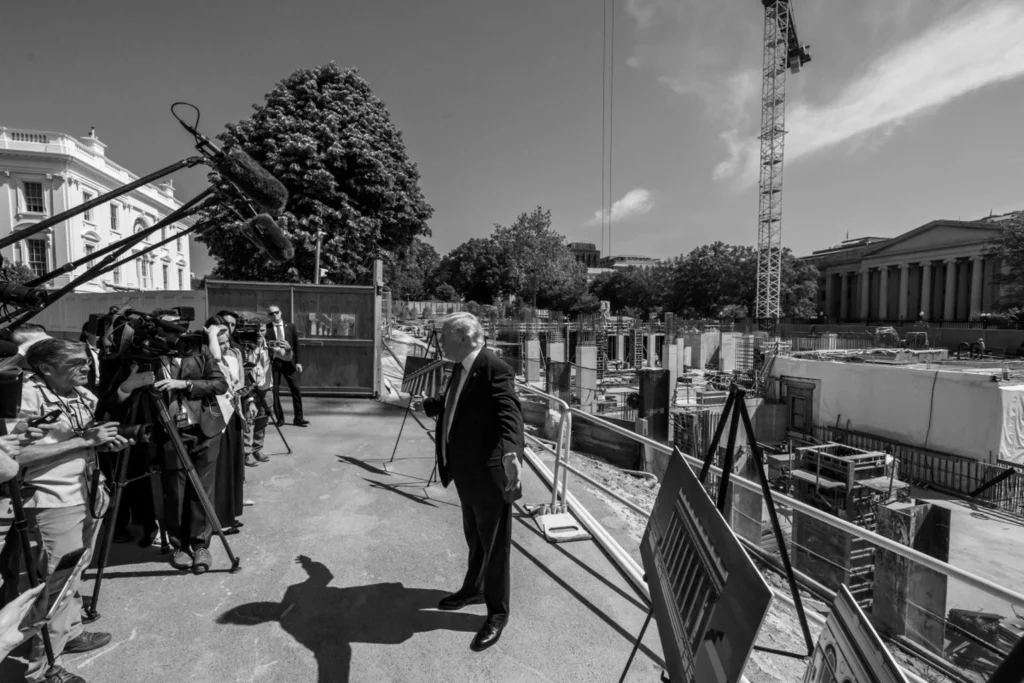
Eric Cortellessa profiles Donald Trump at a weakening point in his second presidency, contrasting his detailed attention to White House construction with problems he cannot easily control. The interview covers the prolonged Iran war, depleted munitions, high fuel and housing costs, tariffs, falling approval, Republican midterm fears, AI expansion, deportation policy, personal wealth, loyalty expectations, and the prospect of investigations under a Democratic Congress.
Opens on time.com · Curated by GlobeRead
GlobeRead's Take
Political power is often easiest to understand through the spaces a leader chooses to control. Here, granite, gold, glass, and concrete are not decorative details; they provide a physical counterpoint to a presidency facing war, economic strain, and electoral resistance. The White House renovation becomes a lens on what happens when command over visible structures exceeds command over consequences.nnThe most revealing contrast is between construction’s certainty and the Iran war’s open-endedness. Trump can specify a wall’s thickness, but the conflict he initially framed as a short operation has stretched for months, raised fuel prices, cost lives, and depleted some U.S. munitions. The report describes Patriots being drawn from other theaters and an Administration trying to expand production. A project meant to demonstrate decisive strength now exposes the limits of speed, stockpiles, alliances, and political patience.nnThe domestic picture complicates the image further. Strong employment and markets coexist with expensive housing, tariffs, and voters who say policy has worsened the economy. Republican candidates are creating distance ahead of the midterms, while Trump leaves open the use of emergency powers and anticipates investigations if Democrats gain Congress. His emphasis on loyalty—even toward Supreme Court justices with lifetime appointments—shows how personal obligation and institutional independence collide in his view of government.nnWe chose this profile for readers trying to connect presidential temperament with policy outcomes. It is not valuable because every claim in an interview should be accepted; its strength lies in placing Trump’s own words beside reporting on military, economic, and political constraints. The physical tour gives a long account a clear organizing image without reducing it to psychology alone. Readers following the midterms will also see why approval ratings, war costs, and congressional control now converge around personal power. Which parts of a presidential legacy are built by intention, and which are built by consequences?
We curate the internet's most interesting articles — science, psychology, history, philosophy and more. Always free, no algorithm.