Why Chess Rewards Patience, Planning, and Responsibility
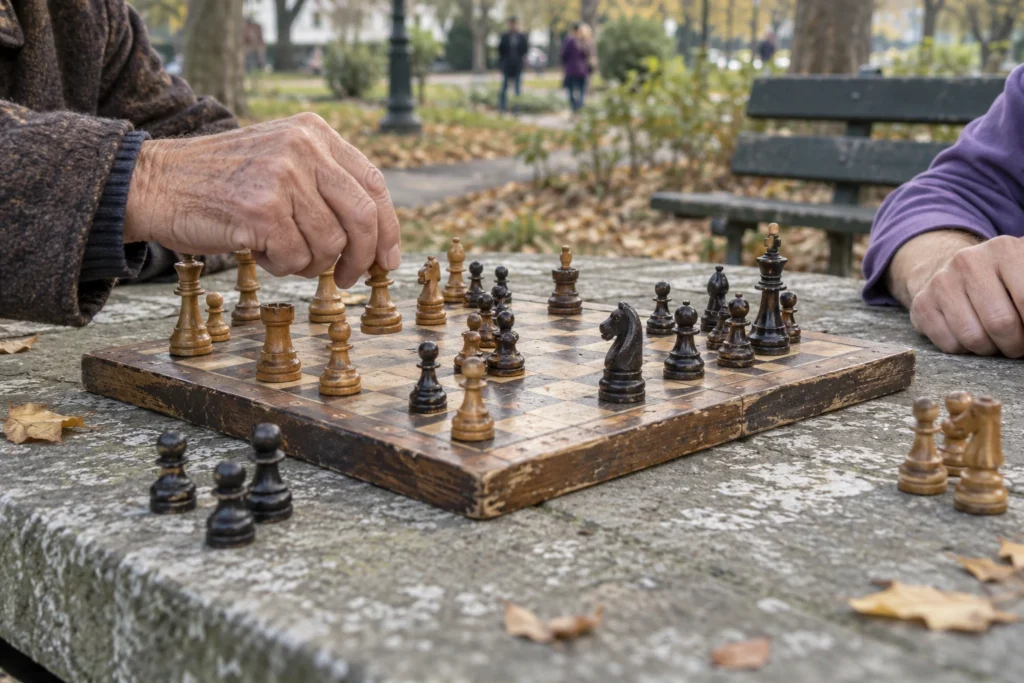
Ibiene presents chess as training for rational thought, patience, concentration, visualization, pattern recognition, planning, responsibility, and social connection. The article compares purposeful play with setting goals in life, then lists educational and health-related benefits, including stronger school performance, cognitive exercise, friendship, and possible support for rehabilitation and some neurological or psychiatric conditions.
Opens on ibiene.com · Curated by GlobeRead
GlobeRead's Take
Chess survives every change in entertainment technology because its central demand remains deeply human: act now while imagining consequences that have not happened. That discipline feels especially relevant in environments designed for immediate reaction. The board offers a rare place where patience is visible, impulsiveness has a cost, and responsibility cannot be transferred to an algorithm, teammate, or unlucky circumstance.nnThe strongest idea here is the link between goals and plans. A player cannot merely want checkmate; each move must improve a position, protect a weakness, or prepare a later action. Even when the plan fails, the sequence can be reviewed. That feedback loop—choose, observe, revise—makes chess a compact laboratory for practical reasoning. Pattern recognition matters, but so does learning when a familiar pattern does not quite fit the present board.nnThe social dimension deserves equal attention. Chess is competitive, yet it also supplies a shared language across ages and backgrounds. Sitting across from another person teaches that an opponent’s idea can be respected even while being resisted. The article makes several broad health claims that readers should treat cautiously unless they consult the supporting research, but its everyday case for focus, visualization, friendship, and accepting consequences is easier to recognize in the experience of regular play.nnWe selected this short overview as an inviting entry point for families, teachers, and adults wondering what the game offers beyond winning. It does not require opening theory or tournament ambition; its value lies in noticing the useful habits a board can rehearse. Readers may also use it as a practical checklist for observing what actually changes after several weeks of regular, deliberate play. Pairing those observations with credible research would help distinguish appealing promises from benefits that can genuinely be measured. Which lesson will arrive first: foresight, patience, or the humility of a missed move?
We curate the internet's most interesting articles — science, psychology, history, philosophy and more. Always free, no algorithm.