Erik Hoeltheintrinsicperspective.com♥ 1EN · C1Why C1?Cultural analysis uses psychology, media theory, metaphor, and nuanced arguments about conformity and identity.11 min read
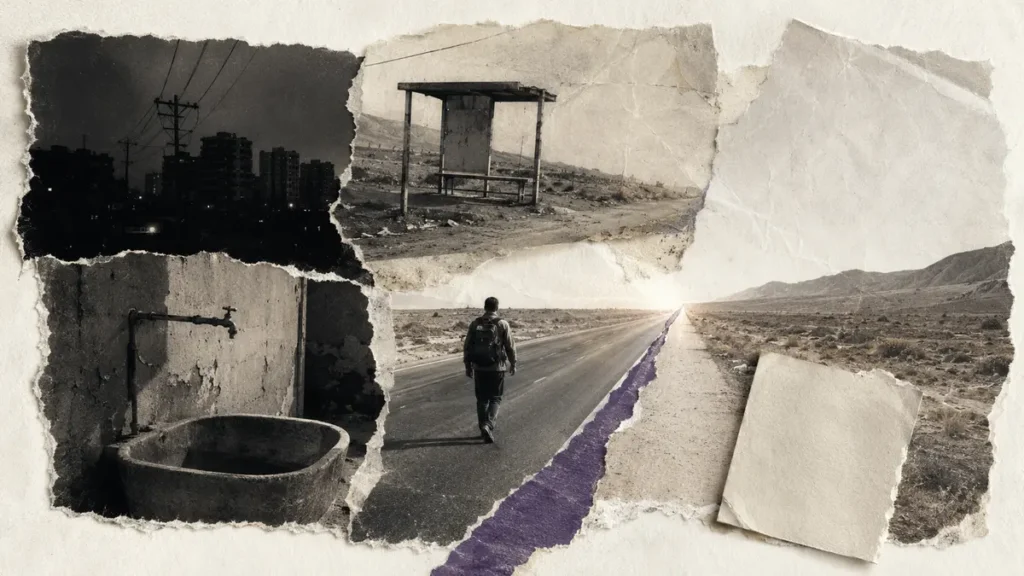
Kanak Kapur’s novella follows Indian migrant workers Yogan and Samar as they pursue opportunity in Dubai. Both confront crowded housing, restricted movement, debt, and exploitative labor, but their paths diverge when Yogan becomes an ice-skating instructor and brings his family over while Samar is trapped by a hidden loan and growing despair. Their friendship reveals the fragile line between mobility, survival, and collapse.
TThe Human Journeyhumanjourney.us
EN · C1Why C1?Reflective essay uses cult psychology, political history, religious vocabulary, and sophisticated social reasoning.9 min read
John Zada uses his visit to an ecstatic Christian gathering and Arthur Deikman’s book The Wrong Way Home to argue that cult thinking exists on a continuum rather than only inside notorious sects. He describes four recurring features—dependence on a leader, rejection of dissent, devaluation of outsiders, and avoidance of independent judgment—and applies them to institutions, workplaces, politics, and everyday group life.
TThe Human Journeyhumanjourney.us
EN · B2Why B2?Mostly accessible general-audience prose uses some nuanced vocabulary and moderately complex ideas.7 min read
Hannah Mulcahy examines how social media changes slang without proving that language is declining. She traces slang’s roles in identity, rebellion, and group membership, then shows how algorithms accelerate its spread and disappearance, preserve once-local expressions, favor brevity and performance, and generate “algospeak” as users adapt their own words to moderation systems and platform incentives.
DDemocracy Now!democracynow.org
EN · C1Why C1?Long-form analysis uses nuanced vocabulary, cultural context, and complex explanatory reasoning.9 min read
By Amy Goodman and Juan González · www.democracynow.org · Sep 5, 2026
BBC correspondent Divya Arya discusses an investigation that identified 30 Instagram ads in India using explicit terms and directing buyers to child sexual abuse material sold through Telegram. The interview examines failures in AI-assisted review, paid amplification, Meta’s response, Telegram’s claims, the human exploitation behind digital transactions, and the Indian government’s demand for removal and an explanation.
TTIMEtime.com
EN · C1Why C1?Long-form analysis uses nuanced vocabulary, cultural context, and complex explanatory reasoning.9 min read
Carey Morewedge argues that back-to-school purchases do more than replace worn supplies: they help children move from summer identities into new student roles. Tracing the ritual from nineteenth-century uniform sales to modern spending, he explains how backpacks, shoes, calculators, and other possessions send signals to classmates and to the self. He acknowledges cost and waste, suggesting that one or two symbolic items can support belonging without replacing everything.
MMiddlebury Institute of International Studiesmiddlebury.edu
EN · B2Why B2?Mostly accessible general-audience prose uses some nuanced vocabulary and moderately complex ideas.7 min read
By CTEC Research Team · www.middlebury.edu · Sep 1, 2026
This research publication traces the historical evolution and contemporary dangers of the New World Order conspiracy theory. It examines how fringe narratives alleging a secret global elite cabal orchestrating world events evolved from post-WWII anxieties into mainstream digital discourse. The report details how these fatalistic worldviews exploit real-world crises, sidetrack public debate, and fuel targeted violence against institutions and communities.
TThe Map Is Mostly Watermap.simonsarris.com
EN · B2Why B2?Mostly accessible general-audience prose uses some nuanced vocabulary and moderately complex ideas.7 min read
By Simon Sarris · map.simonsarris.com · Aug 29, 2026
Simon Sarris wanders through digitized archives to recover “ghosts”: ordinary places, practices, and social possibilities that history rarely names. Through images of home workshops, bistros, shopkeepers, and older forms of informal enterprise, he argues that regulation and professionalization can erase permissionless spaces, hide work from view, reduce intergenerational participation, and narrow the settings where people and ideas meet.
NNautilusnautil.us
EN · C1Why C1?Long-form analysis uses nuanced vocabulary, cultural context, and complex explanatory reasoning.9 min read
Jake Currie reports on a theoretical study of how groups sustain cooperation by updating the reputations of both helpers and recipients. Simulations of more than a million social norms found 61 that were cooperative and evolutionarily stable, all involving this dual assessment. The same mechanism can align judgments about deservingness but may also reinforce exclusion or bullying. It shows how observing treatment can produce consensus without direct information sharing.
TTIMEtime.com
EN · C1Why C1?Long-form analysis uses nuanced vocabulary, cultural context, and complex explanatory reasoning.9 min read
Meehika Barua examines why arranging time with friends now feels unusually fraught. Drawing on attachment psychology and research on the hours required to build closeness, she treats invitations as relational bids and explores unanswered messages, uneven initiation, cancellation, reciprocity, limited social bandwidth, and the small acts of “social hygiene” that keep adult friendships alive. It also considers when stepping back can clarify whether a bond is mutual.
TThe Psychologist (BPS)bps.org.uk
EN · C1Why C1?Long-form analysis uses nuanced vocabulary, cultural context, and complex explanatory reasoning.9 min read
By The Psychologist · www.bps.org.uk · Aug 28, 2026
A psychological critique dismantling societal taboos, medical neglect, and ageist cultural myths surrounding sexuality, romance, and intimacy in older adulthood. The article explores how sexual expression, emotional vulnerability, and sensual connection endure across the lifespan, demonstrating their profound psychological and physical health benefits for aging individuals, long-term relationships, and elder care facilities.
BBPS Research Digestbps.org.uk
EN · C1Why C1?Long-form analysis uses nuanced vocabulary, cultural context, and complex explanatory reasoning.9 min read
By BPS Research Digest · www.bps.org.uk · Aug 28, 2026
An educational psychology report exploring the long-term emotional and academic consequences when students perceive unfair teacher treatment or personal bias in the classroom. The research investigates how feelings of educational injustice damage academic engagement, trigger behavioral defiance, and degrade adolescent self-esteem, underscoring the vital role of teacher fairness, procedural justice, and emotional safety in student development.
BBPS Research Digestbps.org.uk
EN · C1Why C1?Long-form analysis uses nuanced vocabulary, cultural context, and complex explanatory reasoning.9 min read
By BPS Research Digest · www.bps.org.uk · Aug 28, 2026
A psychological research breakdown examining how individuals systematically misjudge the cynicism and distrust of their close friends. The article details empirical studies showing that while people readily spot cynical motives in distant acquaintances or ideological adversaries, they project idealistic benevolence onto close companions, creating social blind spots that distort mutual understanding, vulnerability, and interpersonal communication.
EEF Blogef.com
EN · B2Why B2?Mostly accessible general-audience prose uses some nuanced vocabulary and moderately complex ideas.7 min read
A cultural and linguistic exploration featuring extraordinary facts from global traditions, untranslatable words, and international customs. The article investigates unique historical practices, regional social norms, and linguistic curiosities across different continents, demonstrating how understanding diverse cultural perspectives broadens global literacy and elevates cross-cultural communication.
TTowson Universitytowson.edu
EN · B2Why B2?Clear explanatory prose includes psychology or health vocabulary and moderately complex ideas.7 min read
By Towson University News · www.towson.edu · Aug 26, 2026
An academic feature presenting psychological research and faculty insights on the determinants of human happiness. The article examines experiential spending over material consumption, prosocial behavior, social connection, and community engagement, highlighting how shifting personal priorities from external status to shared experiences and altruism significantly elevates subjective well-being and life satisfaction.
TTime Magazinetime.com
EN · B2Why B2?Mostly accessible general-audience prose uses some nuanced vocabulary and moderately complex ideas.7 min read
A synthesis of findings from the Harvard Study of Adult Development—one of the longest longitudinal studies of human life ever conducted. The article explores how eight decades of data tracking hundreds of participants reveal that warm, supportive interpersonal relationships, rather than wealth, fame, or career prestige, represent the single most powerful predictor of lifelong health, happiness, and cognitive longevity.
HHarvard Medicine Magazinemagazine.hms.harvard.edu
EN · B2Why B2?Mostly accessible general-audience prose uses some nuanced vocabulary and moderately complex ideas.7 min read
By Harvard Medicine Magazine · magazine.hms.harvard.edu · Aug 26, 2026
A medical and sociological report examining the landmark Framingham Heart Study research by Nicholas Christakis and James Fowler on emotional contagion in social networks. The article details how happiness, depression, and lifestyle habits ripple across social ties up to three degrees of separation, illustrating how individual mental health is fundamentally interconnected within broader community clusters and social circles.
AAeonaeon.co
EN · C1Why C1?Dense academic or long-form prose uses abstract concepts, specialist vocabulary, and complex reasoning.12 min read
By Christine Abigail L Tan · aeon.co · Aug 24, 2026
Christine Abigail L Tan draws on Zhuangzi to challenge meritocracy’s belief that success and inequality reflect deserved differences in effort or virtue. Contrasting Daoist stories with Confucian moral cultivation, she shows how rankings turn virtue into capital and encourage self-exploitation for reputation. Zhuangzi treats standards as context-bound and exposes sages and rulers as participants in systems of taking, arguing that lives depend on circumstances no individual creates alone.
AAeonaeon.co
EN · C1Why C1?Dense academic or long-form prose uses abstract concepts, specialist vocabulary, and complex reasoning.12 min read
Sam Dresser revisits C P Snow’s 1959 “two cultures” lecture and F R Leavis’s ferocious 1962 response. Rather than treating their dispute as a simple science-versus-humanities divide, he reconstructs their careers, personalities, class positions and rival visions of modernity. Snow trusted scientific expansion and institutional progress, while Leavis defended literary judgment and the qualitative texture of life, turning an intellectual disagreement into a lasting personal and cultural drama.
AAeonaeon.co
EN · C1Why C1?Dense academic or long-form prose uses abstract concepts, specialist vocabulary, and complex reasoning.12 min read
Tom Ralston argues that generalization is an essential cognitive tool rather than an error in itself. Drawing on Frank Ramsey, generic statements and research on heuristics, he describes general beliefs as dispositions for predicting unfamiliar cases. Stereotypes share this useful structure but can ignore individuality and perpetuate harm. He proposes judging generalizations by how often they mislead, the cost of their errors and whether people actively test them against counterexamples.
PPhilosophy Nowphilosophynow.org
EN · C1Why C1?Dense academic or long-form prose uses abstract concepts, specialist vocabulary, and complex reasoning.12 min read
By Daneyal Afaqui · philosophynow.org · Aug 24, 2026
Daneyal Afaqui uses Theodor Adorno’s critical theory to examine hustle culture’s promise of freedom through relentless productivity. He argues that market pressures are recast as personal empowerment, encouraging people to treat time, hobbies, relationships and identity as economic assets. Social media and motivational culture deepen this internalized discipline, obscuring structural inequality while turning success and failure into moral judgments about individuals.
TTIMEtime.com
EN · C1Why C1?Long-form analysis uses nuanced vocabulary, cultural context, and complex explanatory reasoning.9 min read
Chantelle Lee reports on Gallup findings that 54% of U.S. adults say they drink alcohol, the lowest share recorded since tracking began in 1939. Drinkers also report consuming alcohol less recently, while 53% now consider even one or two daily drinks harmful. The article links the shift to changing health evidence and norms, notes declines across age groups, considers income and medical factors, and highlights an unexplained partisan divide.
SSuperSummarysupersummary.com
EN · B2Why B2?Accessible literary analysis uses plot vocabulary, thematic interpretation, and some advanced terms.10 min read
By SuperSummary · www.supersummary.com · Aug 22, 2026
SuperSummary outlines Arundhati Roy’s 2025 memoir about her turbulent relationship with her mother, educator and women’s-rights campaigner Mary Roy. The guide follows Roy from an abusive childhood through architecture, filmmaking, fiction and political activism, while tracing Mary’s public achievements and private volatility. It highlights family legacy, creative identity, sexism, inheritance rights, religious nationalism and the possibility of respect without simple reconciliation.
BBBC Futurebbc.com
EN · C1Why C1?Long-form analysis uses nuanced vocabulary, cultural context, and complex explanatory reasoning.9 min read
BBC Future examines attempts to loosen daily life from clocks and rigid schedules, asking how people behave when conventional time cues disappear. It considers communities and experiments organized around events, daylight or bodily rhythms rather than exact hours, alongside the practical need for coordination. The article shows that clock time is a social technology, not a natural command, while recognizing that work, travel and shared obligations make complete escape difficult.
NNautilusnautil.us
EN · C1Why C1?Long-form analysis uses nuanced vocabulary, cultural context, and complex explanatory reasoning.9 min read
Tom Vanderbilt investigates why technological and cultural acceleration feels exciting while leaving life rushed and forgettable. Moving from Google latency targets and rapid film editing to slot machines, email and compressed speech, he shows that minds can enjoy faster processing even as dense, fragmented activity weakens memory and meaning. The essay frames speed as a self-reinforcing social system that offers utility, pleasure, stress and domination at once.
PPersuasionpersuasion.community
EN · C1Why C1?Long-form analysis uses nuanced vocabulary, cultural context, and complex explanatory reasoning.9 min read
By Eboo Patel · www.persuasion.community · Aug 21, 2026
Eboo Patel combines gratitude for sociology’s language of power and cultural hierarchy with criticism of its ideological imbalance and research culture. Recalling how “white supremacy” clarified his shame about eating biryani at Thanksgiving, he argues that concepts once exposed neglected realities but increasingly became conclusions seeking evidence. He cites political homogeneity, replication problems, declining association membership and majors, employer distrust, and political backlash.
PPersuasionpersuasion.community
EN · C1Why C1?Long-form analysis uses nuanced vocabulary, cultural context, and complex explanatory reasoning.9 min read
By Carlos Hernández · www.persuasion.community · Aug 21, 2026
Carlos Hernández recounts escaping Nicolás Maduro’s Venezuela during the pandemic, travelling from Puerto Ordaz toward Colombia through theft, dehydration, military predation, smugglers, guerrilla-controlled territory, and repeated shakedowns. He connects the dangerous journey to the collapse of electricity, internet, transport, water, food affordability, cooking gas, and medical care, showing how authoritarianism and economic breakdown reduce ordinary urban life to survival.
FFifty Twofiftytwo.in
EN · C1Why C1?Long-form analysis uses nuanced vocabulary, cultural context, and complex explanatory reasoning.9 min read
By Sohini Chattopadhyay · fiftytwo.in · Aug 21, 2026
Sohini Chattopadhyay reports on the Sagroli Sunrise Project, a long-distance running programme linked to a military-oriented rural school in Maharashtra. The story follows girls training under coach Nandu Jadhav, the nutrition and discipline required for endurance, and sport’s promise of education, employment, prize money, and mobility. It also examines unequal family investment, corporate sponsorship, cricket’s dominance, and the fragile path from talent to a career.
MMediummedium.com
EN · C1Why C1?Long-form analysis uses nuanced vocabulary, cultural context, and complex explanatory reasoning.9 min read
A candid travel chronicle detailing a visitor's challenging two-week journey across modern China. The personal essay explores the extreme friction foreign tourists face navigating a closed digital ecosystem—including cashless payment barriers, mobile app requirements, internet censorship, train ticketing hurdles, and ubiquitous surveillance—contrasting hyper-convenience for citizens with intense isolation for international visitors.
IILLUMINATIONmedium.com
EN · C1Why C1?Long-form analysis uses nuanced vocabulary, cultural context, and complex explanatory reasoning.9 min read
Alina Pitt contrasts her former identity as an endlessly available “good friend” with a newer commitment to boundaries and authenticity. She describes how people-pleasing made her listen, rescue, agree, and remain accessible at personal cost, then reframes reduced availability as recovery rather than selfishness. The essay explores friendship after emotional exhaustion, the loss of relationships built on compliance, and choosing mutual connection over approval.
AAeonaeon.co
EN · C1Why C1?Dense academic or long-form prose uses abstract concepts, specialist vocabulary, and complex reasoning.14 min read
Hallie Lieberman revisits Shere Hite’s landmark anonymous surveys of women’s sexuality, which challenged Freudian claims and documented dissatisfaction with penetration-centered sex, reliance on clitoral stimulation, faked orgasms, and shame around masturbation. The essay situates Hite within feminism, explores race and power missing from her analysis, traces changes in consent politics, and examines the methodological criticism and backlash that obscured her legacy.
WWord by Wordclairemcalpine.com
EN · B2Why B2?Mostly accessible general-audience prose uses some nuanced vocabulary and moderately complex ideas.7 min read
By Claire McAlpine · clairemcalpine.com · Aug 18, 2026
A literary review analyzing Patrick Ryan's historical novel 'Buckeye' on the blog Word by Word. The critique explores the novel's setting in mid-twentieth-century Bonhomie, Ohio, tracking the intertwined lives of two couples shaped by adoption, spiritualist visions, suburban domesticity, and hidden postwar secrets. The review evaluates the book's engaging pacing and atmosphere while critiquing its gender dynamics, character agency, and resolution of family trauma.
UUniversity of Rochesterrochester.edu
EN · B2Why B2?Clear explanatory prose includes psychology or health vocabulary and moderately complex ideas.7 min read
By Sandra Knispel · www.rochester.edu · Aug 18, 2026
Drawing on a new book by psychologists Harry Reis and Sonja Lyubomirsky, the article distinguishes being loved from actually feeling loved. It explains that felt connection requires authentic self-disclosure, interested listening, and a caring response, then introduces five mindsets and the “relationship sea-saw,” where showing attention and care can initiate a reciprocal cycle of responsiveness. The framework treats connection as a learnable practice.
BBookBrowsebookbrowse.com
EN · B2Why B2?Book review uses literary vocabulary, plot description, and accessible thematic evaluation.7 min read
By Letitia Asare · www.bookbrowse.com · Aug 17, 2026
A literary review evaluating Lucas Schaefer's debut novel 'The Slip.' The critique examines the multi-perspective mystery surrounding the ten-year disappearance of troubled teenager Nathaniel Rothstein against the gritty backdrop of Terry Tucker's Austin boxing gym in 1998, exploring themes of racial dynamics, sexual awakening, identity fluidities, class friction, and the transformative power of boxing in modern America.
NNoema Magazinenoemamag.com
EN · C2Why C2?Political philosophy essay uses liberal theory, social narratives, history, and sophisticated abstract reasoning.18 min read
A macro-historical analysis of the structural crisis facing liberal democracy through the lens of shared cultural fictions and communication technologies. The essay traces how print media, broadcast television, and algorithmic social networks reshaped transcendent belief systems, explaining why modern social feeds dissolved the common national narratives essential for democratic cooperation and institutional trust.
AAeonaeon.co
EN · C1Why C1?Developmental psychology essay uses research evidence, social trends, and nuanced arguments about children's play.10 min read
A psychological essay by research professor Peter Gray investigating the continuous decline of unstructured, unsupervised children's free play over the past half-century. Gray links the play deficit directly to dramatic rises in childhood anxiety, depression, narcissism, and feelings of helplessness, arguing that self-directed play is biologically essential for developing social empathy, autonomy, and emotional regulation.
HHigh Country Newshcn.org
EN · C1Why C1?Environmental essay uses ecology, Indigenous knowledge, cultural context, and literary reported prose.12 min read
By Jennifer Sahn and McKenna Stayner · www.hcn.org · Aug 16, 2026
An editorial dialogue between High Country News editors Jennifer Sahn and McKenna Stayner introducing their special Conversations Issue. The conversation explores the power of difficult, nuanced dialogue across polarized Western communities, examining interspecies communication, climate disasters, regional water cuts, and the vital democratic role of independent journalism in bridging deep cultural and political divides.
TThe New York Timesnytimes.com
EN · C1Why C1?Film review uses sophisticated critical language, cultural context, and concise interpretive reasoning.5 min read
By The New York Times · www.nytimes.com · Aug 16, 2026
A documentary review evaluating 'American Doctor,' which chronicles American healthcare professionals volunteering in the Gaza war zone. The piece details the catastrophic destruction of medical infrastructure, acute resource shortages, harrowing triage ethics, and the profound physical and psychological toll borne by physicians risking their lives to treat civilian casualties amidst ongoing bombardment and humanitarian crisis.
TThe New York Timesnytimes.com
EN · C1Why C1?Film review uses nuanced evaluative prose, cinematic vocabulary, and implicit thematic analysis.5 min read
By The New York Times · www.nytimes.com · Aug 16, 2026
A sensitive film review analyzing 'Union County,' an intimate drama following a young man on probation navigating addiction, relapse risk, and fragile romantic hope in rural Ohio. The critique praises Will Poulter's understated performance, highlighting the film's refusal of melodrama in favor of quiet, observational realism regarding the systemic and psychological hurdles of long-term recovery in small-town America.
BBBC Travelbbc.com
EN · B2Why B2?Travel feature uses cultural vocabulary, narrative reporting, and accessible explanations of local tradition.7 min read
A cultural and culinary travel chronicle detailing Estonia's unique summer tradition of home cafe days (kohvikutepäevad), including Seto Kostipäev in Setomaa. The narrative explores how rural and urban residents open private gardens, domestic kitchens, and historic homesteads to strangers, celebrating regional heritage, seasonal foraging, traditional recipes, and communal hospitality across Estonia.
BBBC Culturebbc.com
EN · C1Why C1?Art-history feature uses Canadian cultural context, visual-analysis vocabulary, and sophisticated description.8 min read
A cultural retrospective on Canada's Group of Seven, the 1920s modernist landscape painters who revolutionized Canadian national identity. The article explores how their expressive depictions of the rugged Canadian Shield rejected colonial European styles, while examining their enduring international legacy and the evolving dialogue with the Indigenous 'Indian Group of Seven' artists of the 1970s.
BBBC Culturebbc.com
EN · B2Why B2?Film roundup uses accessible review language, genre vocabulary, and concise critical judgments.12 min read
By Nicholas Barber and Caryn James · www.bbc.com · Aug 15, 2026
A mid-year critical survey of the standout cinematic releases defining 2026 across global cinema. BBC Culture critics evaluate major festival breakthroughs, independent dramas, inventive genre mashups, and visionary international debuts, highlighting how contemporary filmmakers navigate complex personal grief, political resistance, and radical formal experiments while revitalizing the theatrical landscape.
HHarvard University Presshup.harvard.edu
EN · C1Why C1?Education essay uses Chinese institutional vocabulary, social mobility, statistics, and nuanced analysis.10 min read
By Ruixue Jia, Hongbin Li, and Claire Cousineau · www.hup.harvard.edu · Aug 15, 2026
Economists Ruixue Jia, Hongbin Li, and Claire Cousineau analyze the gaokao—China's national college entrance exam taken annually by over ten million students. The essay details how this high-stakes exam operates as a massive state-run tournament that selects social elites, drives intense family investment, and powers national economic growth while generating immense psychological anxiety and structural inequality.
HHarvard University Presshup.harvard.edu
EN · C1Why C1?Labor essay uses economics, employment law, social theory, and nuanced analysis of precarious work.9 min read
By Paul Osterman · www.hup.harvard.edu · Aug 15, 2026
Drawing on an original survey of over 6,000 workers, MIT professor Paul Osterman documents the erosion of standard employment across the modern economy. The research analyzes the rapid rise of contractors, freelancers, and 'marginal employees' who perform essential corporate functions but remain excluded from traditional health benefits, job security, skill training opportunities, and upward career mobility.
HHarvard University Presshup.harvard.edu
EN · C1Why C1?Academic history uses institutional vocabulary, global comparisons, and sophisticated historical argument.12 min read
By William Whyte · www.hup.harvard.edu · Aug 15, 2026
Historian William Whyte explores higher education through its material architecture, dormitories, library stacks, gothic towers, and campus infrastructure. Drawing on his global study, Whyte illustrates how physical spaces—from medieval European halls and colonial colleges to modern universities across the globe—embody institutional power, shape student culture, and reflect shifting social priorities about the public role and future of scholarship.
PPsyche (psyche.co)psyche.co
EN · C1Why C1?Psychology article uses body-image research, masculinity concepts, and nuanced social analysis.8 min read
A clinical and psychological examination of muscle dysmorphia (or 'bigorexia') among men. Psychologist Tom Wooldridge explores how rigid body ideals, gym subcultures, and internalized emotional vulnerability drive men to obsessively pursue excessive muscularity. The essay analyzes how extreme muscular bulk functions as a psychological armor against deep feelings of inadequacy, trauma, and emotional fragility in contemporary masculine culture.
By Bookish Goblin · bookishgoblin.com · Aug 15, 2026
A comprehensive book breakdown, review, and ending analysis of Taylor Jenkins Reid's historical novel 'Atmosphere.' The article details the 1980s NASA Space Shuttle program, following astronomer Joan Goodwin as she navigates astronaut training, institutional sexism, and a secret romance with fellow astronaut Vanessa Ford, leading up to a high-stakes orbital crisis in Mission Control that tests the limits of duty, sacrifice, and love.
MMediummedium.com
EN · B2Why B2?Social-status article uses conversational prose, cultural assumptions, irony, and lifestyle vocabulary.6 min read
A sociological analysis examining how status symbols, luxury consumption, and wealth markers have inverted over time. The post explores how mass production, cheap luxury goods, and changing elite preferences shifted status signaling from flashy material possessions to quiet luxury, privacy, health, and uninterrupted personal time in contemporary society, offering a sharp critique of modern consumer culture.
SSubstacksmirk.substack.com
EN · C1Why C1?Media strategy essay uses platform terminology, network concepts, and sophisticated product reasoning.8 min read
A cultural and technical breakdown comparing public social media platforms with private messaging applications. The post analyzes how broadcast social feeds prioritize viral performance, audience flattening, and outrage metrics, whereas closed group chats restore intimate, low-stakes human communication, organic nuance, and authentic interpersonal trust in contemporary digital environments and online communities.
SSparkNotessparknotes.com
EN · B2Why B2?Study guide uses clear narrative summary, dystopian vocabulary, and moderate literary analysis.12 min read
A detailed study guide and literary summary of Sunrise on the Reaping by Suzanne Collins, the prequel to The Hunger Games series focusing on the 50th Hunger Games and Haymitch Abernathy. The guide outlines the plot structure, central themes, character motivations, and worldbuilding elements of the Second Quarter Quell, detailing how Panem's oppressive Capitol uses doubled tributes, propaganda, and state violence to maintain authoritarian control over its districts.
GGalaxy Brain / Substackwarzel.substack.com
EN · C1Why C1?Internet-culture essay uses media theory, platform concepts, and nuanced analysis of online sameness.10 min read
By Charlie Warzel · warzel.substack.com · Aug 8, 2026
A cultural critique analyzing how modern platform architecture, recommendation algorithms, and feed homogenization have flattened digital experience. Charlie Warzel details how diverse web ecosystems, personal blogs, and distinct digital subcultures were swallowed by uniform social feeds, reducing complex human discourse to flattened, engagement-driven attention loops that prioritize sensational outrage over depth.
PPseudoerasmus Blogpseudoerasmus.com
EN · C2Why C2?Economic-history essay uses technical scholarship, statistics, citations, and dense comparative reasoning.35 min read
By Pseudoerasmus · pseudoerasmus.com · Aug 7, 2026
A rigorous economic history essay analyzing the 'Great Divergence' between Western Europe and East Asia during the early modern era. The post evaluates competing historical explanations—including wage differentials, institutional quality, agricultural productivity, energy availability, and state capacity—to explain why industrialization originated in Britain rather than China or Japan during the eighteenth century.
AAeonaeon.co
EN · C1Why C1?Nutrition essay uses epidemiology, research methods, statistics, and nuanced interpretation of evidence.18 min read
A deep investigation into the scientific complexities, historical contradictions, and methodological flaws of nutritional science. The essay explains why dietary studies frequently yield conflicting advice, examining how observational studies, commercial influences, self-reported data, and individual biological variations make universal nutritional guidelines inherently elusive for the general public.
By Ashley Hajimirsadeghi · www.ashleyhajimirsadeghi.com · Jul 31, 2026
A literary critique and review of Laila Lalami's novel 'The Dream Hotel,' examining themes of state surveillance, migration, institutional control, and individual agency. The review highlights Lalami's sharp prose and nuanced character study of individuals caught within kafala labor systems, bureaucratic borders, and the quiet, persistent fight for personal dignity amidst systemic exploitation. This text provides an essential perspective for contemporary readers.
Nn+1nplusonemag.com
EN · C1Why C1?Literary memoir uses tech-industry jargon, social observation, irony, and sophisticated narrative prose.25 min read
By Anna Wiener · www.nplusonemag.com · Jul 31, 2026
A sharp, first-person literary memoir documenting Anna Wiener's experiences working in Silicon Valley tech startups during the 2010s boom. The essay dissects startup idealism, hyper-capitalism, workplace surveillance, toxic corporate culture, and the growing disconnect between tech utopianism and its actual societal impact, offering an insider critique of modern digital culture. This text provides an essential perspective for contemporary readers.
TThe New Yorkernewyorker.com
EN · C1Why C1?Long narrative journalism uses military, corporate, and disaster vocabulary with sophisticated storytelling.30 min read
By James B. Stewart · www.newyorker.com · Jul 31, 2026
A gripping, poignant biography of Rick Rescorla, the head of security for Morgan Stanley who foresaw the vulnerability of the World Trade Center and saved nearly 2,700 lives on September 11, 2001. The narrative chronicles his life from British military service in Africa and Vietnam to his heroic, selfless sacrifice during the disaster, examining the nature of duty, preparation, and quiet leadership. This text provides an essential perspective for contemporary readers.
RRibbonfarmribbonfarm.com
EN · C1Why C1?Organizational satire uses management theory, cultural references, irony, and dense social analysis.35 min read
A cynical, sociological deconstruction of corporate dynamics based on the television show 'The Office.' Venkatesh Rao introduces the Gervais Principle, dividing organizational hierarchies into Sociopaths (ruthless leaders), Clueless (loyal middle management), and Losers (disengaged base workers). The essay analyzes how these three groups interact, trade power, and manipulate corporate language to survive the inherent absurdity of office life.
TThe Longest Chapterthelongestchapter.com
EN · C1Why C1?Literary review uses sophisticated critical vocabulary, plot analysis, and nuanced interpretation.8 min read
By The Longest Chapter · thelongestchapter.com · Jul 30, 2026
A literary review of Susan Choi's novel 'Flashlight,' a nuanced exploration of adolescence, memory, and the complex emotional terrain of growing up. The review details how the narrative captures the fragile, shifting power dynamics between young protagonists navigating trauma, highlighting the author's precise prose and deep psychological insight into the isolating, often misunderstood nature of childhood vulnerability.
FFiftyTwofiftytwo.in
EN · C1Why C1?Long narrative journalism uses disaster science, geography, local culture, and sophisticated storytelling.25 min read
FiftyTwo presents a deeply reported historical and sociological narrative surrounding a devastating tornado in South Asia. The story weaves together meteorological science, local community history, political neglect, and human resilience, examining how extreme weather events expose structural vulnerabilities within local society.
MMediummedium.com
EN · B2Why B2?Internet-culture essay uses conversational prose, social analysis, and moderately abstract reasoning.7 min read
Only Humana analyzes the emerging cultural shift where thoughtful users are intentionally stepping back from mainstream social media and digital platforms. The post examines how algorithm design, outrage loops, superficial interactions, and relentless metric tracking harm deep work, mental health, and authentic human connection, advocating for intentional digital minimalism.
MMediummedium.com
EN · B2Why B2?Relationship article uses accessible prose, emotional vocabulary, and nuanced behavioral examples.6 min read
Inspire Wonderland examines the subtle behavioral cues and interpersonal micro-behaviors that signal when someone is deprioritizing a relationship. The piece breaks down common subtle actions like inconsistent communication, delayed responses, unidirectional effort, and passive distance, encouraging readers to protect their energy and set self-respecting boundaries.
EEyes On The Prizeontheprize.co.uk
EN · B2Why B2?Book review uses literary vocabulary, plot discussion, and accessible analysis of loneliness and family.6 min read
By Eyes On The Prize · www.ontheprize.co.uk · Jul 28, 2026
A detailed book review evaluating Kiran Desai's novel The Loneliness of Sonia and Sunny, shortlisted for the 2025 Booker Prize. The piece outlines Desai's multi-generational narrative following two young Indian individuals—Sonia, an aspiring writer reflecting on past emotional turbulence, and Sunny, an idealist fleeing personal tragedy—whose lives intertw in modern India as they navigate identity, cultural friction, and isolation.
GGrantlandgrantland.com
EN · C1Why C1?Long cultural essay uses sports and media history, nostalgia theory, and sophisticated narrative prose.25 min read
A sharp cultural analysis examining pop culture's obsession with reboots, sequels, and retro aesthetics. The article explores how digital archiving, corporate risk-aversion, and algorithmic recommendation loops create a self-referential culture that continuously recycled past decades instead of innovating.
SSlate Star Codexslatestarcodex.com
EN · C1Why C1?Long internet essay uses memetics, game theory, politics, irony, and complex social reasoning.35 min read
By Scott Alexander · slatestarcodex.com · Jul 26, 2026
An incisive essay exploring how outrage-driven viral media functions like a biological parasite. Scott Alexander demonstrates that controversial, morally ambiguous ideas spread exponentially faster than agreeable, nuanced truths because outrage forces engagement across ideological divides.
SSubstackwilliamguppy.substack.com
EN · C1Why C1?Cultural essay uses British class vocabulary, irony, social analysis, and nuanced argumentation.10 min read
By William Guppy · williamguppy.substack.com · Jul 26, 2026
A sharp cultural analysis examining middle-class aesthetics, status anxieties, and social posturing. William Guppy dissects the subtle performative behaviors, taste markers, and unwritten cultural rules that define modern middle-class identity and its desperate avoidance of perceived vulgarity.
FFrostbytes Archive / Speechweb.archive.org
EN · C1Why C1?Technical essay uses information design, computing concepts, and sophisticated arguments about communication.10 min read
Neil Postman's historic speech warning against the uncritical adoration of information technology. Postman argues that information surplus without moral, cultural, or philosophical direction leads to social disorientation, paralysis, and the loss of meaningful human context.
EEugene Weieugenewei.com
EN · C1Why C1?Education essay uses institutional history, cultural criticism, and nuanced arguments about liberal learning.5 min read
A critical examination of the decline of liberal arts education and the shift toward hyper-specialized, vocational higher education. Eugene Wei explores how broad interdisciplinary synthesis was replaced by pragmatic skill training, analyzing the loss of intellectual curiosity in modern university culture.
NNeil Kakkar Blogneilkakkar.com
EN · C1Why C1?Very long synthesis uses anthropology, history, economics, and abstract arguments about human societies.35 min read
A concise, structured synthesis of Yuval Noah Harari's 'Sapiens,' outlining how shared myths, cognitive revolutions, agriculture, and money enabled large-scale human cooperation. The summary distills key historical shifts that transformed Homo sapiens from an insignificant ape into the dominant force on Earth.
MMelting Asphaltmeltingasphalt.com
EN · C1Why C1?Economic-psychology essay uses status theory, incentives, abstraction, and sophisticated social reasoning.12 min read
By Kevin Simler · meltingasphalt.com · Jul 22, 2026
A provocative sociological critique arguing that excessive material wealth acts as a social pollutant that insulates individuals from community interdependency. Kevin Simler examines how financial independence subtly degrades genuine human connection by replacing mutual social obligations with transactional market solutions.
HHarvard Reviewharvardreview.org
EN · C1Why C1?Literary review uses sophisticated critical vocabulary, historical context, and nuanced interpretation.8 min read
By Harvard Review · www.harvardreview.org · Jul 20, 2026
A sophisticated literary review of Simon Winchester's book 'Land,' examining how the human obsession with territorial ownership, geometric boundaries, and legal deeds has fundamentally re-engineered global geography, fueled imperial exploitation, and dictated modern geopolitical power structures.
MMelting Asphaltmeltingasphalt.com
EN · C1Why C1?Psychology essay uses signaling theory, identity concepts, and sophisticated abstract reasoning.12 min read
By Kevin Simler · meltingasphalt.com · Jul 20, 2026
An analytical psychological essay defining 'crony beliefs'—convictions we hold not because they are factually accurate, but because they provide social advantages, group belonging, and tribal protection. The text explores how our brains prioritize social survival over objective truth in complex cultural landscapes.
NNoema Magazinenoemamag.com
EN · C1Why C1?Political-design essay uses democratic theory, digital governance, and complex institutional reasoning.12 min read
By Noema Magazine · www.noemamag.com · Jul 20, 2026
An innovative political essay proposing the revival of ancient Athenian 'sortition'—the random selection of citizens for governance—to fix modern digital polarization. The text argues that replacing algorithmically driven majoritarian voting with representative citizen assemblies could restore trust, nuance, and democratic legitimacy to online governance.
TThe Vergetheverge.com
EN · C1Why C1?Investigative report uses labor policy, trauma, technology, and detailed workplace reporting.22 min read
A harrowing investigative report exposing the severe psychological toll and toxic working conditions experienced by Facebook content moderators at a third-party facility in Arizona. The piece documents how workers dealing with continuous graphic violence and conspiracy theories develop symptoms akin to PTSD while navigating corporate indifference.
SSlateslate.com
EN · C1Why C1?Design history uses cultural context, historical detail, and specialized vocabulary about utensils.8 min read
A fascinating historical look at the evolution and adoption of the table fork in Western culture. The article traces the fork's journey from an exotic, heavily ridiculed utensil in medieval Europe to an indispensable tool of modern dining etiquette. It reveals how simple design changes, like adding a curve and a fourth tine, transformed eating habits and reflected broader shifts in societal norms, hygiene standards, class distinction, and technological progress.
SSerious Eatsseriouseats.com
EN · B2Why B2?Personal food essay uses conversational prose, cooking vocabulary, and nuanced ideas about community.8 min read
By Serious Eats · www.seriouseats.com · Jul 16, 2026
A warm and highly practical guide proposing a structured, low-friction framework for hosting weekly dinners to combat modern suburban isolation and build resilient local communities. The article details how removing performative hosting expectations and focusing on simple, repeatable routines allows families to foster deep, authentic personal connections, offering families a robust blueprint for local community building.
TThe Atlantictheatlantic.com
EN · C1Why C1?Social-science feature uses relationship research, sociology, statistics, and nuanced cultural analysis.10 min read
By Rhaina Cohen · www.theatlantic.com · Jul 16, 2026
An exploration of alternative relationship structures, highlighting individuals who choose platonic friendships as their primary partnership over traditional romantic marriages. The text examines the legal barriers, deep social stigmas, and profound psychological fulfillment associated with building an intentional family centered entirely on deep, long-term platonic commitment, mutual trust, and domestic cohabitation.
AAeonaeon.co
EN · C1Why C1?Philosophical travel essay uses Indian religious terms, cultural history, and nuanced reflective prose.14 min read
An evocative exploration of Varanasi, Hinduism, and the modern commercialization of spirituality along the Ganges. The essay contrasts the ancient, raw traditions of physical death and transcendent contemplation with the tourist-driven, sanitized commercial industry that now surrounds these historic rituals, examining if authentic spiritual realization remains accessible in a heavily commodified modern culture.
TThe New Yorkernewyorker.com
EN · C1Why C1?Narrative journalism uses prison policy, medicine, social analysis, and nuanced reflective prose.8 min read
By Avi Steinberg · www.newyorker.com · Jul 16, 2026
A profound exploration of prison libraries and the hidden intellectual life of incarcerated individuals. The narrative demonstrates how accessing books serves as an essential lifeline for personal agency, cognitive preservation, and internal growth within a carceral system explicitly designed to restrict physical autonomy. It highlights how the human drive for critical thinking, self-directed education, and imaginative escape stubbornly survives the most severe conditions of total confinement.
RRibbonfarmribbonfarm.com
EN · C1Why C1?Corporate-culture essay uses organizational jargon, irony, and nuanced arguments about institutions.10 min read
An exploration of corporate institutional design, analyzing the sociological reality of large enterprises as durable engines of human collaboration. The text dismantles the myth of independent freelancing as a superior alternative to structured corporate ecosystems.
RRibbonfarmribbonfarm.com
EN · C2Why C2?Systems essay uses biology, organizational theory, abstraction, and dense conceptual vocabulary.12 min read
An analysis of human collective intelligence, comparing modern digital platforms and algorithmic coordination networks to biological superorganisms. The text explores how decentralized protocols challenge traditional nation-states and corporations.
RRibbonfarmribbonfarm.com
EN · C1Why C1?Economic essay uses monetary theory, policy concepts, metaphor, and sophisticated abstract reasoning.12 min read
An exploration of Universal Basic Income (UBI) through a psychological and systemic lens, examining how decoupling income from labor alters human identity, motivation, and social power dynamics. The essay challenges traditional labor moralities.
PPaulGraham.compaulgraham.com
EN · C1Why C1?Essay uses technological change, analogy, social norms, and nuanced reasoning about addiction.6 min read
By Paul Graham · www.paulgraham.com · Jul 13, 2026
An analysis of the growing addictiveness of modern technologies, consumer goods, and social media platforms. The essay argues that as capitalism and technical efficiency accelerate, companies become structurally better at designing highly addictive habits, outstripping our baseline biological self-regulation.
DDavid Perell's Essaysperell.com
EN · C1Why C1?Media essay uses internet-culture references, abstraction, metaphor, and sophisticated cultural analysis.11 min read
An analysis of the sensory and cultural impact of real-time social feeds on historical memory and collective wisdom. The essay explores how the internet's hyper-focus on the immediate present starves our capacity for deep reading, long-term thinking, and cultural preservation.
WWait But Whywaitbutwhy.com
EN · B2Why B2?Long humorous essay uses idioms, demographic analysis, slang, and varied cultural vocabulary.12 min read
An analytical and comedic breakdown of the psychological, social, and generational factors driving baby naming trends. The essay introduces frameworks for classifying name types and examines the hidden biases that shape how parents select identities for their children.
TThe New Atlantisthenewatlantis.com
EN · C1Why C1?Legal-technology essay uses prosecution, evidence law, AI terminology, and nuanced institutional reasoning.12 min read
By The New Atlantis · www.thenewatlantis.com · Jul 10, 2026
An analysis of the risks of introducing automated AI systems, predictive algorithms, and automated evidence review tools into the judicial system. The author outlines frameworks for preserving human judgment, accountability, and constitutional protections in criminal prosecution.
TThe New Atlantisthenewatlantis.com
EN · C1Why C1?Economic essay uses real-estate finance, franchising, investment structures, and complex institutional analysis.15 min read
By The New Atlantis · www.thenewatlantis.com · Jul 10, 2026
An exploration of corporate franchising, institutional real estate ownership, and the financial structures underpinning everyday retail landscapes. The essay reveals how private equity and index funds dictate the physical layout of modern American suburbs.
TThe New Atlantisthenewatlantis.com
EN · C1Why C1?Urban-technology essay uses social theory, architecture, digital culture, and sophisticated conceptual contrasts.15 min read
By The New Atlantis · www.thenewatlantis.com · Jul 10, 2026
A conceptual essay contrasting the physical reality of traditional urban spaces with the atomized, algorithmic environments of digital platforms. The piece examines how shifting from physical neighborhoods to online echo chambers alters civic engagement, human trust, and political stability.
TThe Atlantictheatlantic.com
EN · C1Why C1?Technology and childhood essay uses psychology research, cultural criticism, and nuanced causal arguments.9 min read
By The Atlantic · www.theatlantic.com · Jul 10, 2026
An interview and analysis highlighting social psychologist Jonathan Haidt's advocacy for altering smartphone display settings to grayscale. The text explores how stripping color from mobile devices breaks dopamine-driven feedback loops and helps restore attention spans in children and adults.
TThe Atlantictheatlantic.com
EN · C1Why C1?Political-data analysis uses public-record terminology, institutional context, and sophisticated critical reasoning.8 min read
By The Atlantic · www.theatlantic.com · Jul 10, 2026
An investigative report detailing shifts in public record retention, institutional data access, and transparency under federal changes. The piece explores the long-term historical and civic implications of missing institutional databases and incomplete public archives.
TThe Atlantictheatlantic.com
EN · C1Why C1?Podcast discussion uses economics and social analysis with nuanced arguments about optimization and trade-offs.12 min read
By The Atlantic · www.theatlantic.com · Jul 10, 2026
A critical podcast transcript discussing society's obsession with efficiency, algorithmic optimization, and metrics tracking. The conversation highlights how hyper-optimization erodes cultural resilience, destroys serendipity, and increases human anxiety by treating life as an engineering problem.
TThe New Yorker (August 24 1992)newyorker.com
EN · C1Why C1?Long literary sports essay uses baseball jargon, nuanced characterization, and sophisticated narrative prose.35 min read
By William Finnegan · www.newyorker.com · Jul 10, 2026
William Finnegan's two-part August 1992 New Yorker profile of Dr. Mark Renneker — a San Francisco family physician, cancer-prevention lecturer, and obsessive surfer who has been logging every surf session at Ocean Beach since 1969. Part One introduces Doc's relationship with Ocean Beach's notoriously dangerous winter surf (cold, powerful, with a strong shore-break), his rigorous statistical record of every session's wave interval, and the philosophical question behind the piece: how do you negotiate a life-consuming passion with a vocation that claims equal urgency? Finnegan's first surf writing and the piece that set the template for Barbarian Days (2015 Pulitzer Prize). Note: New Yorker blocked direct fetching; verified through extensive secondary sources including longform.org and direct quotations.
NNoema Magazinenoemamag.com
EN · C1Why C1?Digital-culture essay uses sociology, game theory, online slang, and complex models of status conflict.12 min read
By Venkatesh Rao · www.noemamag.com · Jul 10, 2026
Venkatesh Rao's September 2020 Noema essay argues that online culture has entered a permanent state of endemic conflict he calls the "Internet of Beefs" — structured like a feudal manorial economy. High-profile "knights" (celebrity commentators and intellectuals) accumulate armies of anonymous "mooks" whose combat clicks fuel the system. Rao argues that knights profit not from winning conflicts but from keeping them alive, and that sincere belief is actually a liability in this economy. The piece introduces concepts like "beef-only thinking" and "mook manorialism" that have since become standard vocabulary.
FFifty Two (fiftytwo.in)fiftytwo.in
EN · C1Why C1?Long narrative journalism uses ecology, conservation, Indian cultural context, and literary description.20 min read
By Supriya Roychoudhury · fiftytwo.in · Jul 9, 2026
Supriya Roychoudhury's long-form piece for Fifty Two — India's weekly longform publication — traces the full life of Hathi, a three-year-old female elephant gifted by Indian President V.V. Giri to the Kabul Zoo in 1973. The piece follows the elephant through Afghanistan's subsequent turbulence: the Soviet invasion, the Mujahideen civil war, Taliban rule, and Kabul Zoo's gradual reconstruction after 2001. Hathi died in April 1993 when a rocket hit her enclosure during the civil war. She was 23.
MMedium (@aesspi)medium.com
EN · B2Why B2?Relationship article uses emotional vocabulary, psychology concepts, and accessible explanatory prose.7 min read
Aesspi's July 2026 Medium essay names ten specific micro-events that build emotional attraction below conscious awareness — including an accidental truth-telling before someone has decided to be vulnerable, mirroring body language that happens without intention, shared attention toward something outside both people simultaneously, a joke that reveals an unexpected value alignment, and a moment of conflict handled without withdrawal. The piece insists these work precisely because they are not performed; the analytical brain catches up only after the feeling is already forming.
SSlate Star Codexslatestarcodex.com
EN · C1Why C1?Long political-psychology essay uses tribalism, ideology, cultural references, irony, and complex argument.25 min read
By Scott Alexander · slatestarcodex.com · Jul 3, 2026
Scott Alexander's September 2014 SSC essay, widely credited as one of the most important pieces of online writing about tribal psychology. Opening from Chesterton's Father Brown and the distinction between genuine and fake forgiveness, Alexander argues that the political left's celebrated tolerance of minorities is not actually tolerance (because they don't disapprove of those groups) — and that the real outgroup of the Blue Tribe is the Red Tribe. Uses Implicit Association Test data and resume studies to show that partisan bias is stronger than racial bias. Ends with a self-critical admission that the essay itself is in-group signalling.
TThe Jargon File / catb.orgcatb.org
EN · C1Why C1?Technical reference text uses computing history, hacker slang, specialist terminology, and cultural context.25 min read
By Eric S. Raymond (editor) · www.catb.org · Jul 3, 2026
The introductory chapter of the Jargon File — a collaboratively maintained glossary of hacker slang that has been evolving since the early 1970s. ESR's introduction explains why hacker slang is culturally significant: it encodes shared mental states and problem-solving stances that don't fit conventional linguistic reality, distinguishes in-group from mundane, and reveals a uniquely self-conscious linguistic culture that treats slang formation as a game. Includes the observation that hackers are notably both low-context (with machines) and high-context (with each other) communicators.
LLogic(s) Magazine Issue 6: Playlogicmag.io
EN · C1Why C1?Technology memoir uses computing history, counterculture references, and sophisticated narrative prose.14 min read
Shuja Haider traces the 1985 birth of acid house in Chicago's Muzic Box nightclub, where DJ Ron Hardy played a Roland TB-303 track by Phuture (Earl 'Spanky' Smith Jr. and DJ Pierre) four times in one night until dancers 'lost their mind'. The essay moves from the TB-303's history as a commercial failure to its transformation by Black queer musicians into a genre that circled the globe — landing in Detroit techno, English rave, and contemporary EDM. A love letter to machine music framed by Marxist cultural theory and Amiri Baraka's Blues People. Note: suggest adding a Music category.
WWait But Whywaitbutwhy.com
EN · B2Why B2?Long relationship guide uses conversational language, psychology concepts, humor, and many idioms.20 min read
Part 2 of Tim Urban's widely shared February 2014 Wait But Why essay on choosing a life partner. He reframes marriage not as a sweeping romantic narrative but as 20,000 ordinary Wednesdays, and argues that long-term happiness requires three ingredients: an Epic Friendship (the Traffic Test), a Feeling of Home (trust, natural chemistry, acceptance of flaws), and a Determination to Be Good at Marriage (communication, equality, fighting well). Draws on John Gottman's research throughout.
NNeilKakkar.comneilkakkar.com
EN · C1Why C1?Systems essay uses technical analogies, cascading effects, and sophisticated causal reasoning.18 min read
An analytical exploration of information cascades, detailing how individuals make decisions based on the observed actions of others rather than their own private signals. The piece uses game theory to explain herd behavior, social conformity, and the fragility of collective intelligence.
TTechCrunchtechcrunch.com
EN · C1Why C1?Housing analysis uses economics, regulation, local politics, and detailed causal reasoning.12 min read
A comprehensive investigative analysis of the San Francisco housing crisis, charting decades of restrictive zoning policies, political gridlock, and demographic shifts. The report traces how anti-growth activism and tech industry growth collided to create one of the most unaffordable urban markets.
EEsquireesquire.com
EN · C1Why C1?Long sports biography uses literary narration, baseball jargon, idioms, and extensive cultural context.35 min read
A profile of aging baseball legend Ted Williams in retirement, capturing his intense perfectionism, complex personality, and relationship with fame. The narrative serves as a study of greatness, legacy, and the isolation that often accompanies extreme mastery in a specific human pursuit.
WWorks in Progressworksinprogress.co
EN · C1Why C1?Long policy essay uses economics, housing regulation, statistics, and complex causal arguments.25 min read
By John Myers & Sam Bowman · worksinprogress.co · Jul 1, 2026
An influential essay arguing that a shortage of affordable housing in major cities is the primary driver of numerous systemic modern crises, including economic stagnation, declining fertility rates, regional inequality, obesity, and carbon emissions. It advocates for comprehensive planning reforms.
TThe New Yorkernewyorker.com
EN · C1Why C1?Long memoir uses literary prose, cultural references, aging themes, and nuanced emotional observation.28 min read
A poignant and witty meditation on the realities, indignities, and unexpected joys of growing old in your nineties. The author reflects on surviving his peers, managing physical decline, maintaining a vibrant emotional life, and coping with the profound losses that accumulate over nearly a century of living.
GGrantagranta.com
EN · C1Why C1?Literary lecture uses cultural history, religion, metaphor, and sophisticated arguments about storytelling.17 min read
An exploration of the concept of the sacred in a secular world, questioning whether literature can occupy the space left by religious faith. Rushdie examines the power of the novel to challenge orthodoxies, encourage pluralism, and express the complexities of human existence without relying on divine absolute truths.
NNFXnfx.com
EN · C1Why C1?Growth essay uses psychology, network effects, product design, and detailed reasoning about social sharing.10 min read
NFX co-founder James Currier — who ran Tickle.com (one of the original viral social media products, scaling to 150 million users in the early 2000s) with five psychology and statistics PhDs on staff — distils what they mapped into 8 motivation clusters that drive sharing: Status, Identity Projection, Being Helpful, Safety, Order, Novelty, Validation, and Voyeurism. The piece argues that founders who design products around these specific motivations engineer virality on purpose rather than hope for it.
TThe New Yorker (January 15 2018)newyorker.com
EN · C1Why C1?Cultural criticism uses philosophy, wellness terminology, irony, and sophisticated argumentative prose.12 min read
By Alexandra Schwartz · www.newyorker.com · Jun 26, 2026
New Yorker staff writer Alexandra Schwartz reviews a stack of recent self-help and anti-self-help books — Tim Ferriss, Will Storr's Selfie, Carl Cederström and André Spicer's The Wellness Syndrome, and Svend Brinkmann's Stand Firm — to ask what the booming self-improvement industry (an estimated ten billion dollars a year) reveals about the people buying it. Schwartz pulls Storr's line that "we're living in an age of perfectionism, and perfection is the idea that kills." Note: New Yorker blocked direct fetching; verified through extensive secondary coverage.
MMelting Asphaltmeltingasphalt.com
EN · C1Why C1?Evolutionary aesthetics essay uses biology, psychology, signaling theory, and sustained abstract reasoning.18 min read
By Kevin Simler · meltingasphalt.com · Jun 26, 2026
Kevin Simler builds a theory of beauty as a two-player game: a Desire player (the perceiver, shaped by evolution or learning to be attracted to certain features) and a second player who deliberately produces those features to attract attention. Mashing up ideas from David Deutsch, Geoffrey Miller, Richard Prum, and César Hidalgo, the essay traces the move from solitary appetite to the signaling arms races that produced flowers, peacocks, art, and human ornament.
WWiredwired.com
EN · B2Why B2?Games feature uses industry vocabulary, cultural references, and clear narrative reporting about development.8 min read
By Wired byline not verified · www.wired.com · Jun 25, 2026
A Wired feature published in the run-up to Rockstar Games' release of Grand Theft Auto VI, the sequel to 2013's GTA V — the highest-grossing entertainment product in history. The piece sets the stage for a release expected to redefine the games industry: estimated nine-figure development budget, a likely Vice City setting, two playable protagonists, and the gravitational pull a single title now exerts on platform makers, marketing channels, and pop culture. Note: Wired blocked direct fetching; byline not surfaced.
WWired (October 2009)wired.com
EN · C1Why C1?Long science feature uses immunology, public-health evidence, statistics, and nuanced cultural argument.30 min read
Amy Wallace's October 2009 Wired feature on pediatrician and vaccine researcher Paul Offit — co-inventor of the rotavirus vaccine — and his uncomfortable role as the most public scientific opponent of the modern anti-vaccine movement. The piece reports on the harassment Offit received (including death threats), the Andrew Wakefield 1998 Lancet paper later retracted as fraudulent, and the public-health consequences of declining childhood vaccination rates across the United States. Note: Wired blocked direct fetching.
NNew York Magazinenymag.com
EN · C1Why C1?Long reported feature uses psychology, education research, family dynamics, and sophisticated narrative prose.25 min read
By Author and title not verified · nymag.com · Jun 25, 2026
An older New York Magazine feature whose specific title and byline could not be confirmed from indexed sources I could reach (the page itself was blocked from automated access). The numeric ID (38951) places it within New York Magazine's mid-to-late 2000s features archive. To classify this row with confidence, please paste the article title and author so I can replace this placeholder with a verified summary. Treat the current categorisation as provisional.
Pperell.comperell.com
EN · C1Why C1?Long intellectual profile uses theology, philosophy, politics, and sophisticated interpretive argumentation.35 min read
David Perell's roughly 65-minute essay on how Christianity and the philosopher René Girard's theory of mimetic desire shape Peter Thiel's worldview, investing instincts, and politics. Perell traces Thiel's Stanford-era encounter with Girard, the way mimetic theory reframes competition as imitation rather than rationality, and how a religious anthropology of scapegoating and apocalypse underwrites Thiel's positions on startups, monopoly, technology stagnation, and the future of liberalism.
Nnadia.xyznadia.xyz
EN · C1Why C1?Essay uses intellectual history, sociology, institutional concepts, and nuanced arguments about idea production.12 min read
Nadia Asparouhova (formerly Nadia Eghbal) opens with China Miéville's novel Embassytown — where the alien Ariekei become so addicted to a human's voice that they tear their society apart in pursuit of more — and uses it as a parable for the relationship between humans and powerful ideas. She argues ideas are not passive tools we wield but quasi-autonomous patterns that recruit hosts, replicate through us, and reshape our lives. The essay traces how this view changes how we should think about belief, identity, and intellectual influence.
KKnowingless (knowingless.com)knowingless.com
EN · C1Why C1?Long personal essay uses theology, philosophy, memoir, and nuanced arguments about belief and identity.20 min read
Aella's 2017 memoir-essay about being homeschooled by a professionally evangelist father and stay-at-home mother — media censored, computer use secretly monitored, friends vetoed unless sufficiently Christian, science books deriding evolution as baseless. The piece traces the long arc from total embeddedness in that worldview to its slow unravelling, the social and family costs of leaving, and the specific intellectual and emotional moves that made losing belief possible. Written with the precise self-observation that has since defined her writing.
HHarper's Magazine (January 1996)harpers.org
EN · C1Why C1?Long literary essay uses sophisticated cultural criticism, metaphor, and complex reflective argument.35 min read
By David Foster Wallace · harpers.org · Jun 24, 2026
David Foster Wallace's January 1996 Harper's essay (later the title piece of his 1997 collection A Supposedly Fun Thing I'll Never Do Again), about a seven-night Celebrity Cruises Caribbean luxury cruise on the Zenith — which he renames the "Nadir." Roughly 25,000 words of footnoted reporting framed playfully as a brochure for the trip, the piece launched an entire microgenre of cruise journalism and remains one of the most-cited literary essays of the late 20th century. Wallace's central note: "There's something about a mass-market Luxury Cruise that's unbearably sad."
TThe Technium (kk.org)kk.org
EN · B2Why B2?Business essay uses clear examples and arithmetic, with creator-economy concepts and some specialized vocabulary.8 min read
Kevin Kelly's foundational 2008 (later updated) essay arguing that to make a living as a creator you don't need millions of fans — you need roughly 1,000 "true fans," people who will buy whatever you make. At an average annual yield of about $100 per true fan, that's a $100,000 income. The piece sketches the math, the implications for the long tail of creators that the internet makes economically viable for the first time, and the practices (direct contact, generosity, sustained craft) that build the relationship.
Aaaronzlewis.comaaronzlewis.com
EN · C1Why C1?Essay uses social theory, online-culture references, abstraction, and nuanced arguments about conversation.6 min read
By Aaron Z. Lewis · aaronzlewis.com · Jun 24, 2026
Aaron Z. Lewis riffs on game theory's notion of a "solved game" (Nine Men's Morris, checkers, simple tic-tac-toe) to ask how many of our everyday conversations are similarly pre-determined — script-driven exchanges where both parties already know each move's response. He argues that the most intellectually satisfying conversations are the unsolved ones: open, exploratory, where neither participant knows what they'll think by the end. A short, playful 2014 post on conversational quality as a function of genuine epistemic openness.
GGQgq.com
EN · C1Why C1?Long narrative journalism uses crime, legal, historical, and cultural vocabulary with sophisticated storytelling.30 min read
By GQ feature (byline not verified) · www.gq.com · Jun 24, 2026
A GQ longform feature on the November 25, 2019 robbery of the Green Vault (Grünes Gewölbe) museum in Dresden — Augustus the Strong's 18th-century treasure chamber and one of the oldest museums in Europe. Two intruders entered through a small window, smashed display cases with an axe, and made off with three sets of 18th-century diamond jewellery (37 parts each) including the Dresden White diamond, in what was widely called the largest museum heist in modern history. Eventually traced to the Remmo clan; five convicted in 2023. Note: GQ blocked direct fetching.
Ppseudoerasmus blogpseudoerasmus.com
EN · C2Why C2?Dense anthropology review uses cultural-evolution theory, economics, statistics, and academic argumentation.30 min read
By pseudoerasmus · pseudoerasmus.com · Jun 24, 2026
A companion to pseudoerasmus's longer "Where do pro-social institutions come from?" (covered in v11). This post drills into Joseph Henrich and the Cultural Group Selection team's edited volume Experimenting with Social Norms, which deployed Ultimatum, Dictator, and third-party-punishment games across small-scale societies on four continents. The data, pseudoerasmus argues, support the cultural-evolution case that humans are not born with universal pro-social preferences but acquire them through embedded markets, world religions, and other large-scale cooperative institutions.
By Michael Nielsen · michaelnotebook.com · Jun 20, 2026
Quantum computing researcher and writer Michael Nielsen's June 2022 long-form working notes on Effective Altruism. Self-described as "disorganised rough thinking, not a polished essay," they work through what he finds compelling about EA (the use of evidence and reason to benefit others as much as possible), why he's not himself an effective altruist, why the mindset feels foreign to him, and what alternative moral frameworks for doing good might look like. A characteristically honest exploration from someone EA-adjacent rather than EA-aligned.
CCCRU (Cybernetic Culture Research Unit)ccru.net
EN · C2Why C2?Experimental theory uses dense neologisms, philosophy, cybernetics, fragmented syntax, and extreme abstraction.15 min read
Nick Land's notorious 1994 CCRU text, the foundational document of accelerationism. In dense, manic, theory-fiction prose, Land sketches a story in which "Earth is captured by a technocapital singularity": markets learn to manufacture intelligence, the Holy Roman Empire, Napoleon, the Reichs, and the Soviet International are all chewed up by an emergent Planetary Commercium, deregulation and the state arms-race each other into cyberspace, soft-engineering and cybernetic biology rewrite the species, and "Neo-China arrives from the future." Required reading for 21st-century accelerationist politics.
Ppaulgraham.compaulgraham.com
EN · B2Why B2?Concise startup essay uses informal language, business concepts, and nuanced distinctions about ambition.4 min read
By Paul Graham · www.paulgraham.com · Jun 20, 2026
Paul Graham's May 2021 essay on a small but interesting group: nerds who are not the stereotype of the quiet, diffident outsider but are in fact intensely competitive, often overconfident when young, and unusually independent-minded. Graham argues that this combination — intelligence, fierce competitiveness, and an aggressive (rather than passive) independent-mindedness — explains a remarkable share of the people who go on to do unusually ambitious work, in both founders and scientists. A short character study, partly drawn from observation at YC.
HHigh Country Newshcn.org
EN · C1Why C1?Long wildlife feature uses ecology, field research, conservation terminology, and literary narrative prose.18 min read
High Country News writer Sarah Gilman reports on the cougar, North America's most widely distributed large predator — and one of the least understood. Despite decades of telemetry, scat studies, and trail-camera research, mountain lions remain wrapped in myth, fear, and political controversy across the American West. Gilman weaves together biology, wildlife-management history, and the lived experience of communities near cougar country to ask why a species we now know so much about still feels like a creature of legend.
NNew Scientistnewscientist.com
EN · C1Why C1?Policy and social-science reporting uses research methods, statistics, and nuanced causal reasoning.7 min read
By New Scientist (byline not surfaced) · www.newscientist.com · Jun 19, 2026
Australia's December 2025 world-first ban on social media for under-16s — a story that began with the South Australian premier's wife reading Jonathan Haidt's The Anxious Generation and pressing her husband to act — is now treated by researchers as the largest natural experiment ever run on adolescents and screens. The piece walks through the longitudinal designs being deployed to measure effects on mental health, social interaction, political engagement, and academic outcomes, the major methodological pitfalls (cross-country comparisons, self-selection), and what other governments watching will and won't be able to conclude. Note: New Scientist blocked.
NNew Scientistnewscientist.com
EN · C1Why C1?Science journalism uses demographic statistics, relationship research, and nuanced social analysis.8 min read
By New Scientist (byline not surfaced) · www.newscientist.com · Jun 19, 2026
A New Scientist report on the deepening "relationship recession" among Gen Z — drawing on the 2026 State of Our Unions data (Wheatley Institute / Institute for Family Studies, 5,275 single adults 22–35) showing only about one in three young adults actively dating, with 74% of women and 64% of men reporting no or only a few dates in the past year. The piece walks through the proposed drivers — phones, pandemic-era isolation, dating-app burnout, and economic anxiety — and the downstream effects on mental health and even workplace social skill. Note: New Scientist blocked direct fetching.
CCoffee & Junkcoffeeandjunk.com
EN · C1Why C1?Decision-making essay uses forecasting, cognitive-bias concepts, and nuanced organizational reasoning.6 min read
By Abhishek Chakraborty · coffeeandjunk.com · Jun 19, 2026
Chakraborty takes apart the Silicon Valley mantra "strong opinions, weakly held" — a principle for moving forward despite uncertainty — and shows how it quietly fails inside groups. The problem isn't the framing; it's that bad actors weaponise it, turning "weakly held" into "assumed true until you definitively prove otherwise." The essay walks through how groups can preserve the original spirit of the principle while installing the social norms (challenge culture, falsifiable claims, rotating devil's advocate) that stop it from becoming an excuse for unaccountable authority.
CCoffee & Junkcoffeeandjunk.com
EN · C1Why C1?Systems analogy uses traffic physics, organizational behavior, and abstract reasoning about workplace dynamics.6 min read
By Abhishek Chakraborty · coffeeandjunk.com · Jun 19, 2026
Chakraborty opens with the familiar mystery of a highway suddenly turning into a parking lot of stopped cars with no visible cause — no accident, no obstruction — and uses it to introduce the physics concept of phase transition. He argues that organisations behave the same way: pressure accumulates invisibly until one small additional input flips the system from cooperative-flow to gridlock. The piece reframes office politics not as the work of bad actors but as an emergent property of crowded, high-friction systems crossing a threshold.
TTruly Adventuroustrulyadventure.us
EN · C1Why C1?Long narrative journalism uses legal history, activism, slang, and sophisticated cultural storytelling.35 min read
By Truly Adventurous staff (byline not surfaced) · www.trulyadventure.us · Jun 18, 2026
A long-form Truly Adventurous narrative about Sharon Snow — fed up at nearly 50 with her job and marriage — who drops her youngest daughter at Texas Woman's University in 1993, falls in love with the all-women campus, and enrols herself. When the state moves to admit men and erase the only all-women public university in the country, Sharon helps lead a campaign of rallies, sit-ins and custom-printed shirts ("Texas Woman's University — Keep It That Way!") that ends up reshaping her life. Note: byline not surfaced in metadata.
CColorado State University — Warner College of Natural Resourceswarnercnr.source.colostate.edu
EN · C1Why C1?Animal-behavior science article uses bioacoustics, statistical research, and detailed scientific explanation.7 min read
By Jayme DeLoss · warnercnr.source.colostate.edu · Jun 18, 2026
Colorado State University reports on a study (published in Nature Ecology & Evolution) showing that wild African elephants address each other with name-like calls. Using machine learning on years of recordings from Amboseli and Samburu in Kenya, the team showed that elephants do not simply imitate the receiver's call (as dolphins do) but use arbitrary vocal labels — the same abstract, symbolic naming we associate with humans. Test recordings of name calls produced clear responses from the named individuals and not from others.
TThe Atlantictheatlantic.com
EN · C1Why C1?Marriage-course feature uses psychology, sociology, academic research, and nuanced relationship analysis.12 min read
By Christine Gross-Loh · www.theatlantic.com · Jun 18, 2026
A February 2014 Atlantic feature on Northwestern University's popular "Marriage 101" course, taught by Alexandra Solomon and colleagues, which uses Mating in Captivity, For Better, and meaty academic studies to teach undergraduates that healthy long-term relationships are built, not found. The first lesson — there are no soul mates — is the foundation: research consistently shows people who hold soul-mate beliefs cope worse with conflict and are more likely to leave, while "work it out" believers fare better. Note: Atlantic article fetched via secondary sources.
MMental Flossmentalfloss.com
EN · B2Why B2?Popular psychology article uses clear examples, restaurant terminology, and behavioral-science concepts.7 min read
By Mental Floss staff · www.mentalfloss.com · Jun 18, 2026
A short, practical Mental Floss explainer of eight design tricks restaurants use to nudge what you order: removing dollar signs to reduce "pain of paying," anchoring with one outrageously priced item so everything else looks reasonable, calling out the chef's-pick dish in a box, deploying sensory words (slow-roasted, hand-cut) that boost perceived value, exploiting the eye-path on a menu page, limiting choices to reduce decision fatigue, and a couple more — turning ordering into a small case study in applied behavioural economics.
TThe Hustlethehustle.co
EN · B2Why B2?Business feature uses accessible narrative prose, legal context, and entrepreneurship vocabulary.10 min read
A profile of the Ganz sisters — identical twins who built a thriving business around everything twins, triplets, and multiples. The piece traces how they turned the niche cultural curiosity of multiples into a real commercial niche (apparel, conventions, casting, branded products), why brands and television producers keep coming back to them, and what their business reveals about identity, marketing, and the strange economics of selling a category that exists in only a small percentage of the population.
TThe Atlantic (May 2025)theatlantic.com
EN · C1Why C1?Privacy essay uses technology, law, surveillance concepts, and nuanced political and ethical reasoning.12 min read
By Atlantic Ideas (byline not verified) · www.theatlantic.com · Jun 16, 2026
An Atlantic Ideas piece on the small industry of "extreme-privacy consultants" who, for a substantial fee, will scrub their clients off the internet — removing them from data brokers, untangling them from public records, restructuring their digital and physical lives so they become very hard to find. The essay sits inside the broader cultural moment of doxing, AI-driven identification, and surveillance capitalism, and asks what the existence of this service tells us about the privacy that ordinary Americans no longer have. Note: Atlantic blocked direct fetching.
WWorld Hum (2006; archived at Wayback Machine)web.archive.org
EN · B2Why B2?Travel how-to uses direct instructions, humor, cultural context, and practical sanitation vocabulary.5 min read
By World Hum staff (byline not surfaced) · web.archive.org · Jun 16, 2026
A 2006 World Hum travel feature that doubles as a practical guide and a small piece of cultural anthropology. The author calls travel writers Doug Lansky (editor of There's No Toilet Paper on the Road Less Traveled) and Vagabonding's Rolf Potts for technique — heels-up versus heels-down, what to do with the cup of water in lieu of paper, why nobody shakes hands with the left hand in much of Asia and the Middle East. Wry, helpful, and quietly informative about how parochial Western bathroom assumptions actually are.
HHarper's Bazaarharpersbazaar.com
EN · B2Why B2?Memoir excerpt uses conversational storytelling, humor, cultural references, and nuanced personal reflection.10 min read
By Phoebe Robinson · www.harpersbazaar.com · Jun 16, 2026
An excerpt from Phoebe Robinson's 2018 essay collection Everything's Trash, But It's Okay — published in Harper's Bazaar's culture section. Robinson — comedian, podcaster (2 Dope Queens, Sooo Many White Guys), and author — covers feminism, race, dating, body politics, money, friendship, and pop culture in a voice that pairs comic timing with sharp argument. The excerpt sits inside her larger thesis: the world is fundamentally trash and yet we still build joy, sisterhood, and meaning inside the wreckage. Note: Harper's Bazaar blocked direct fetching.
CCracked.com (2011)cracked.com
EN · B2Why B2?Humorous advice uses slang, profanity, pop-culture references, and direct but sometimes figurative language.15 min read
Lindy West's 2011 Cracked column addressed to that year's graduating class, opening: "Greetings, graduating classes of 2011! Congratulations on accomplishing all you have accomplished... and pre-condolences on all the shit you will fail at." Beneath the showmanship is genuine practical advice — on handling money, jobs, friends, breakups, and the alarming gap between self-image and competence — delivered with the bracing, profane humour that became West's signature. A graduation speech disguised as a Cracked listicle.
BBrick Magazinebrickmag.com
EN · C1Why C1?Literary essay uses cultural references, philosophical reflection, and sophisticated arguments about social life.10 min read
Heti opens on stage at Trampoline Hall wondering aloud why she and the audience aren't all just at home in their pyjamas, where "no one is going to snub you or disappoint you, the whisky is not cheap, and few of us will get laid." She catalogues four major reasons we leave the house — desire, sociological/aesthetic curiosity, self-testing, and obligation — and works the question over until going out becomes something stranger and more revealing than the casual social act it pretends to be.
FFarnam Streetfs.blog
EN · C1Why C1?Psychology essay uses moral-emotion research, social reasoning, and nuanced distinctions about shame.7 min read
Recently, Parrish notes, shame has gotten a bad rap — branded as toxic, destructive, the residue of moralistic cultures we've moved past. He argues this is too sweeping. Distinguishing toxic shame (the global "I am bad") from healthy shame (the specific "that act was wrong"), he makes the case that shame is one of the foundational social technologies for course-correction in individuals and communities, and that abandoning it entirely leaves us without the very signal that, used carefully, can produce real positive change.
DDeep Fix (Substack)deepfix.substack.com
EN · C1Why C1?Cultural critique uses philosophy, social analysis, metaphor, and sophisticated arguments about humility.12 min read
By Alex Olshonsky · deepfix.substack.com · Jun 15, 2026
Deep Fix №12. Olshonsky argues that the defining feature of our cultural moment is a near-total disappearance of humility — public, intellectual, and interpersonal — and that this is not coincidental to the various crises we keep talking about but is itself the crisis underneath them. He treats humility not as self-abasement but as the discipline of being willing to be wrong, to be slow, to not know, and traces what its absence does to politics, friendship, and the inner life of the people who scroll for hours each day.
TThe New Yorkernewyorker.com
EN · C1Why C1?Demographic analysis uses statistics, policy context, social science, and nuanced cultural reasoning.10 min read
By The New Yorker Open Questions (byline not verified) · www.newyorker.com · Jun 15, 2026
An Open Questions piece in The New Yorker's culture section examining whether the United States has become a gerontocracy in fact as well as in optics — with elderly presidents, octogenarian congressional leaders, and rising public anxiety about cognitive decline at the top of American life. The essay sits inside the broader cultural moment where age has become a recurring political and social question, asking what it means to be governed and led by a generation whose lived reference points predate the world most citizens actually inhabit. Note: New Yorker blocked direct fetching; byline could not be confirmed.
By Foresight Institute and Ava · theexistentialhope.substack.com · Jun 13, 2026
A cross-post launching a Foresight Institute / Existential Hope series in which writers Ava admires from outside the usual AI conversation are commissioned to answer one question: what future with AI would they actually want? Anchored by Ava's framing — "Goodhart's Law has never been more relevant: optimization becomes dangerous when we no longer know what we're optimizing for" — the piece argues that the age of "sloptimization" is ending, that human flourishing is more than the reduction of suffering, and that the imaginative work of describing futures worth wanting is now overdue.
Bbookbear express (Substack)avabear.xyz
EN · B2Why B2?Short reflective essay uses accessible prose with metaphor and moderately abstract ideas about effort.4 min read
Substack writer Ava pushes back on the common line that lives on social media look "unattainable and perfect." Whenever she sees something beautifully curated, what she sees is the sweat: the money expended, the surgery and fillers, the workouts, the interior designers, the carefully selected objects, the hours spent staging and filming. The post is a quiet defence of effort as the substance behind every effortless surface, and a reminder that what looks like the absence of work is almost always the presence of a great deal of it.
By Christopher Flannery · imprimis.hillsdale.edu · Jun 13, 2026
Flannery traces the texture of the American holiday season — from Dickens's A Christmas Carol through Frank Capra's It's a Wonderful Life, the 1965 animated A Charlie Brown Christmas with Linus reading from the King James Version, and (yes) Die Hard — and argues that the secular American Christmas only makes sense because the original Christmas story, in the language most Americans first encountered it, remains the substrate underneath. The New Year coda extends the argument: the American calendar of meaning is built on inherited religious time.
By Michael Medved · imprimis.hillsdale.edu · Jun 13, 2026
Film critic Michael Medved's 1989 Hillsdale College address, later published in Imprimis, arguing that an overt and pervasive hostility to religion and religious values had taken hold in mainstream American film. Drawing on his career as a Hollywood reviewer, he walks through patterns in late-1980s movies — sympathetic portrayals of clergy collapsing, faith treated as fanaticism, the religious life of ordinary Americans largely absent from the screen — and frames the gap as a cultural disconnect between the industry and most of its audience.
Pperell.comperell.com
EN · C1Why C1?Marketing essay uses strategy vocabulary, cultural examples, and nuanced arguments about positioning.10 min read
Writer David Perell calls marketing "the Galapagos Islands of human behaviour" — a place where the strange but consistent rules of how humans actually decide are most visible. Working through Edward Bernays's claim that an invisible government of marketers shapes mass consciousness, the evolutionary roots of signal-trust (low-pitched voices, conspicuous consumption), and the modern reality of an attention-choked, trust-starved environment, he argues that in a world of imperfect information made under cognitive pressure, signals do not just supplement decisions — they substitute for them. Emotion trumps truth; one powerful signal is worth a thousand facts.
MMedium (@edithtali)medium.com
EN · B2Why B2?Relationship commentary uses mostly direct prose, idioms, social assumptions, and emotional vocabulary.5 min read
An opinion essay engaging with the contested East Asian discourse around "leftover women" (剩女) — never-married women past a certain age — by quoting three men who say they would rather marry a divorced woman than an older single one. The piece is a window into a particular cultural framing of marriage markets, mate selection, and gendered expectations rather than empirical research; it should be read as commentary on attitudes some men hold, not as a normative claim about women's worth.
TThe New Yorkernewyorker.com
EN · C1Why C1?Long medical essay uses historical detail, specialist terminology, and nuanced arguments about social change.24 min read
Surgeon and writer Atul Gawande's classic July 2013 New Yorker essay. Why do some medical innovations spread in months (surgical anesthesia, demonstrated publicly in 1846, was in capitals around the world within a year) while others take decades (Joseph Lister's 1867 antiseptics, oral rehydration therapy)? Gawande shows that economics and technical complexity can't explain the gap. The deeper pattern: anesthesia made life better immediately for both patient and doctor; antisepsis attacked invisible germs and made the doctor's life harder. To spread the stalled ideas — like simple childbirth practices that could save hundreds of thousands of newborn lives — you don't need broadcast media or apps, you need people, talking face-to-face. Note: New Yorker blocked direct fetching; this summary is built from multiple secondary sources quoting the article.
By Henrik Karlsson · www.henrikkarlsson.xyz · Jun 8, 2026
Henrik Karlsson argues against the mass-media-era injunction to "write to be accessible." A blog post, he claims, is best understood as a very long, very specific search query: the more idiosyncratic and unmarketable, the more useful, because instead of broadcasting to a general audience it filters the world down to the small number of people who care about exactly your concerns. Writing in public is then less performance than network construction — letting strangers route interesting material to your inbox by recognising themselves in your prose.
LLogic(s) Magazinelogicmag.io
EN · C1Why C1?Technology ethics essay uses surveillance, platforms, organizational incentives, and nuanced critical analysis.14 min read
UCLA information-studies professor Miriam Posner traces how supply-chain software (SAP, Oracle, custom ERP systems) makes global capitalism feel reliable while quietly making large parts of it invisible. The essay opens with a Dutch minibar bar of Tony's Chocolonely — founded to be the first chocolate produced without slave labour, and sued by a competitor allegedly claiming such chocolate was "impossible" — and through Fairphone, Apple, and Samsung argues that the data models inside supply-chain software literally don't have fields for the things companies don't want to see. The code conceals the labour.
CComment Magazinecomment.org
EN · C1Why C1?Cultural criticism uses philosophy, theology, metaphor, and dense arguments about social coherence.12 min read
By Andrew Lynn (likely; unverified) · comment.org · Jun 6, 2026
Drawing on Weber and Peter Berger's "sacred canopy" framework, the essay argues that modernity's differentiation of value spheres (politics, economy, arts, religion) makes fragmentation the default condition of selfhood — and that three cultural mechanisms mould us inside that condition: narrative scripts (the American Dream, etc.), mimetic models (Girard and Luke Burgis), and habituation. The author's research with Christian corporate professionals — who described themselves as "mercenaries" at work while leading lay ministries on Sunday — anchors the argument that recognising these forces is the first step in resisting them. Note: byline not visible to me in the page's metadata; the framing strongly matches sociologist Andrew Lynn's faith-and-work research.
CComment Magazinecomment.org
EN · C1Why C1?Workplace essay uses religious, sociological, and professional vocabulary with sustained analytical reasoning.11 min read
A review of sociologist Andrew Lynn's Saving the Protestant Ethic: Creative Class Evangelicalism and the Crisis of Work (Oxford UP) — the definitive sociological account of the American evangelical faith-and-work movement. Robinson traces how at least one new evangelical faith-and-work organisation has launched every year for the past two decades, complements Lynn's account with David Miller's earlier God at Work, and asks the unsettling question Lynn keeps pressing: is the integration of faith and work always, or even usually, a good thing?
NNoema Magazinenoemamag.com
EN · C1Why C1?Philosophical interview uses media theory, cultural criticism, and dense abstract language about information.10 min read
By Byung-Chul Han (interviewed by Nathan Gardels) · www.noemamag.com · Jun 4, 2026
Berlin-based Korean-German philosopher Byung-Chul Han — author of The Burnout Society and The Disappearance of Rituals — talks with Noema's Nathan Gardels about how the accelerated, narrative-less torrent of digital information disorients society and fragments community. Riffing on Marx's "all that is solid melts into air," Han argues information now plays that role, hollowing out shared time, ritual, and democratic deliberation. His counterweight is art, which he says can "evoke the glimmer of a new form of life."
MMedium (elliottdotorg)elliottdotorg.medium.com
EN · B2Why B2?Travel commentary uses accessible narrative prose with airline, baggage, and consumer-rights vocabulary.6 min read
By Christopher Elliott · elliottdotorg.medium.com · Jun 4, 2026
Consumer-advocacy travel writer Christopher Elliott uses a recent Kuala Lumpur–Johor Bahru flight to explain why airports are seeing a surge in deliberately abandoned luggage. The piece traces the phenomenon to ultra-low-cost-carrier baggage economics — when checked-bag fees and oversize-bag penalties exceed the value of what's inside, passengers do the math at the counter and walk away — and to the spreading view of cheap clothes and souvenirs as disposable.
MMelting Asphaltmeltingasphalt.com
EN · C1Why C1?Social-status essay uses psychology, signaling concepts, pop-culture references, and layered abstract reasoning.17 min read
By Kevin Simler · meltingasphalt.com · Jun 1, 2026
Simler offers a deep evolutionary and game-theoretic account of social status, arguing it isn't one thing but two distinct systems: dominance (status from intimidation; produces submission, fear-and-avoidance, taking by force, entitlement) and prestige (status from impressive skill; produces admiration, approach, freely given deference, displays of humility). Drawing on animal dominance hierarchies, eye-contact patterns, and behavioral research, he shows the two systems are nearly opposite — and that almost every human status interaction is some blend of the two.
NNoema Magazinenoemamag.com
EN · C1Why C1?Human-evolution essay uses anthropology, genetics, cultural evolution, and sustained scientific reasoning.13 min read
By Lesley Newson and Peter Richerson · www.noemamag.com · Jun 1, 2026
UC Davis researchers Newson and Richerson tell the story of Alfred Russel Wallace's 1850s malarial epiphany — that struggle for survival, not supernatural force, drives evolution — and then argue what Wallace himself realized: humans don't compete like other animals. Drawing on their book A Story of Us, they advance the gene-culture coevolution view that humanity emerged from two intertwined evolutionary processes — biological natural selection and cumulative cultural learning — which together explain everything from consciousness and cooperation to why humans care for the weak and sick.
TThe Noösphere (Medium)medium.com
EN · C1Why C1?Social analysis uses economics, gender roles, statistics, and nuanced arguments about work and relationships.10 min read
Drawing on a 2025 Ipsos/Global Institute for Women's Leadership survey of 23,000+ people in 29 countries (in which nearly a third of Gen Z men said a wife should obey her husband), Jagielnicka argues that the structural disappearance of the male-breadwinner economy collides with status anxiety to drive young men toward 'traditional' gender ideals. The manosphere and right-wing populists exploit this by promising a return to the past — but pushing women out of the workforce would, via the 'lump of labor' fallacy, ultimately shrink the economy rather than restore male wages.
NNoema Magazinenoemamag.com
EN · C1Why C1?Digital-culture essay uses environmental metaphors, media theory, and nuanced social analysis.9 min read
By Laura J. Martin · www.noemamag.com · May 31, 2026
Environmental historian Laura J. Martin traces how the internet stopped being a place you visited and became an environment you live inside — from the ceremonial dial-up of the late 1990s (a fixed window in your parents' computer chair), through Wi-Fi-era "dead zones and hotspots" that reorganized our houses, to the smartphone era when connectivity "buzzed against our thighs." She argues the right response is not just less screen time but less screen space, and reminds us that the supposedly weightless internet is heavy industry — undersea cables, cobalt from the DRC, lithium from Chile's Salar de Atacama, river-cooled data centers.
NNoema Magazinenoemamag.com
EN · C1Why C1?AI and design essay uses technical concepts, spatial reasoning, and sophisticated analytical vocabulary.12 min read
Architectural designer and writer Chenoe Hart argues that as AI agents start "seeing" the world — Face ID, driverless car perception, OpenAI's Operator using human web interfaces — our user interfaces are turning double-sided, requiring an inverse "XU" design. She introduces "reverse skeuomorphic perception": just as early GUIs disguised computers as desktops and folders, AI now perceives the physical world through computational metaphors (bounding boxes, labels, semantic tags), translating reality into the language of databases and producing a new, partial machine-view of human life.
AAeonaeon.co
EN · C1Why C1?Essay blends anthropology, psychology, and social theory with academic vocabulary and nuanced argument.18 min read
Evolutionary anthropologist Anna Machin argues that the Western hierarchy of love — parent-child first, romantic partner second, family third, friends a distant fourth — is out of step with how we actually live. Drawing on Dunbar's 150-person network, Julianne Holt-Lunstad's 2010 meta-analysis showing supportive social networks halve mortality risk (on par with quitting smoking), brain-scan studies showing friends' neural responses match our own, and the rise of 'chosen families,' platonic co-parenting, and queer platonic partnerships, she contends friendships — chosen, conditional, renewed day by day — are now the survival-critical relationships at the heart of our health, happiness, and longevity.
LLogic(s) Magazinelogicmag.io
EN · C1Why C1?Labor essay uses platform-economy jargon, sociology concepts, quotations, and nuanced critical analysis.13 min read
Sarah Mason, a Lyft driver and UC Santa Cruz grad student, recounts how ride-hailing platforms gamify driver behavior — star ratings, weekly ride 'challenges,' surge heat maps drivers call 'the pink,' badges and 'Accelerate' levels — so that drivers compete with the algorithm rather than their employer. Drawing on Michael Burawoy's 'making out' study at Allied Steel and Natasha Dow Schüll's research on slot-machine design, she shows how gamification redirects worker conflict away from capital, preys on the desire to be liked and useful, and keeps drivers hooked on a game whose rules they cannot see and cannot win — while wages sit below local minimum and 96 percent of drivers quit within a year.
TThe Atlantictheatlantic.com
EN · C1Why C1?Higher-education essay uses cultural criticism, institutional vocabulary, and nuanced social reasoning.8 min read
By The Atlantic Ideas (author not verified) · www.theatlantic.com · May 27, 2026
Argues that colleges should make room for the joy and playfulness of thinking — the kind of slow, ambiguous inquiry invited by close-reading a work like Henry James's 'The Turn of the Screw' — rather than treating higher education as pure job training or a stage for ideological combat; quoting Richard Hofstadter, the piece insists that meaningful intellectual life comes from the quest for new uncertainties, not the possession of settled truths.
RRibbonfarmribbonfarm.com
EN · C1Why C1?Dense social analysis uses economics, signaling theory, abstract models, and sophisticated argumentative prose.22 min read
Treats social status as an economic good with monetary properties—a medium of exchange, store of value, and rough unit of account—and explores how it is transacted in everyday interactions, how it shapes organizational efficiency, and how it can produce both healthy meritocracy and pathologies like gossip and politics.
DDavid Brookstheatlantic.com
EN · C1Why C1?Long sociological essay uses historical evidence, abstract family concepts, and sophisticated argumentation.36 min read
By Erik Hoel · www.theintrinsicperspective.com · Apr 15, 2026
Individual thought is being swallowed by the collective roar of the digital crowd. Learn how the new 'hive mind' is rewriting the rules of human identity.
By Erik Hoel · www.theintrinsicperspective.com · Apr 15, 2026
In an era of endless data, why has the lone genius seemingly vanished from the world? Peer into the structural forces killing the next great scientific revolution.
TThe Map is Mostly Watermap.simonsarris.com
EN · C1Why C1?Reflective technology essay uses philosophical ideas, cultural references, and nuanced abstract reasoning.11 min read
Peel back the \"dark matter\" of Western civilization to discover why the world’s most famous book is actually the ultimate contrarian secret hiding in plain sight.
Mmoretothat.commoretothat.com
EN · C1Why C1?Abstract psychology ideas, nuanced vocabulary, and long sentences require advanced reading.4 min read
Have you ever wondered why a simple evening with friends leaves you more exhausted than a grueling day of physical labor?
The culprit isn\'t the conversation, but a silent, high-stakes game of \"identity switching\" that you’re playing without even knowing it.
Between the person who charms the boss and the one who haunts the couch, a dangerous gap emerges where your true self begins to vanish.
We often blame the judgment of others for our mounting anxiety, but the truth is far more intimate—and much more unsettling.
What if the key to unbreakable confidence isn\'t adding new skills, but ruthlessly subtracting the versions of \"you\" that you actually despise?
Unlock the mystery of the \"Social Hangover\" and discover how to reclaim the singular, grounded identity that no opinion can ever touch.